The Lady from Shanghai - 4K Ultra HD Blu-ray
The Orson Welles classic that's been released at least three times on Blu-ray finally comes to 4K UHD, and it's never looked or sounded better. The stunning Dolby Vision transfer and top-notch audio make this the definitive home video presentation of The Lady from Shanghai, one of Hollywood's most arresting and hypnotic film noirs. Must Own. 
Storyline: Our Reviewer's Take

Some film masterworks instantly captivate critics and audiences alike; others are misunderstood or dismissed when first released and need to germinate for years or even decades before their greatness is recognized and appreciated. Orson Welles' The Lady from Shanghai most decidedly falls into the second category. A dismal failure when it premiered in 1948 (more than a year after shooting wrapped), this brooding, complex, and quirky film noir baffled the viewing public, which couldn't decipher the convoluted plot and refused to accept its revered Love Goddess, Rita Hayworth, as a cold and calculating femme fatale. (Even Columbia studio chief Harry Cohn couldn't make heads or tails of the story and reportedly offered $1,000 to anyone who could explain it to him.) Moviegoers stayed away, yet as time marched on and tastes and styles changed, The Lady from Shanghai slowly began to receive its proper due and now stands alongside Citizen Kane as one of Welles' finest efforts.
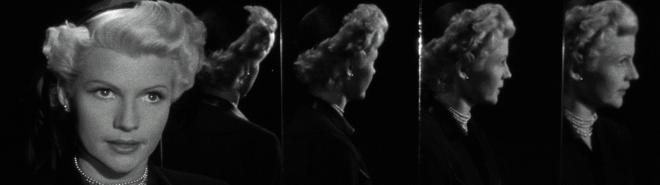
Distinguished by meticulous craftsmanship, brilliant innovation, and excellent performances, The Lady from Shanghai is one of the most visually arresting and artistic productions of Hollywood's Golden Age. This is a film-lover's film, and its dazzling imagery and impeccable technique overshadow the deficiencies and incongruence of its plot. Welles' keen eye concocts shot compositions and camera angles that often produce a sense of awe. Leading the list is the legendary hall of mirrors climax, a brazen and bravura display of cinematic showmanship that's rarely been matched. According to Welles biographer Charles Higham, the set, personally designed by Welles, was "a marvel of art direction," containing 80 plate glass mirrors, each seven by four feet, and 24 distorting mirrors, all of them one way, so cinematographer Charles Lawton, Jr. could shoot through them.
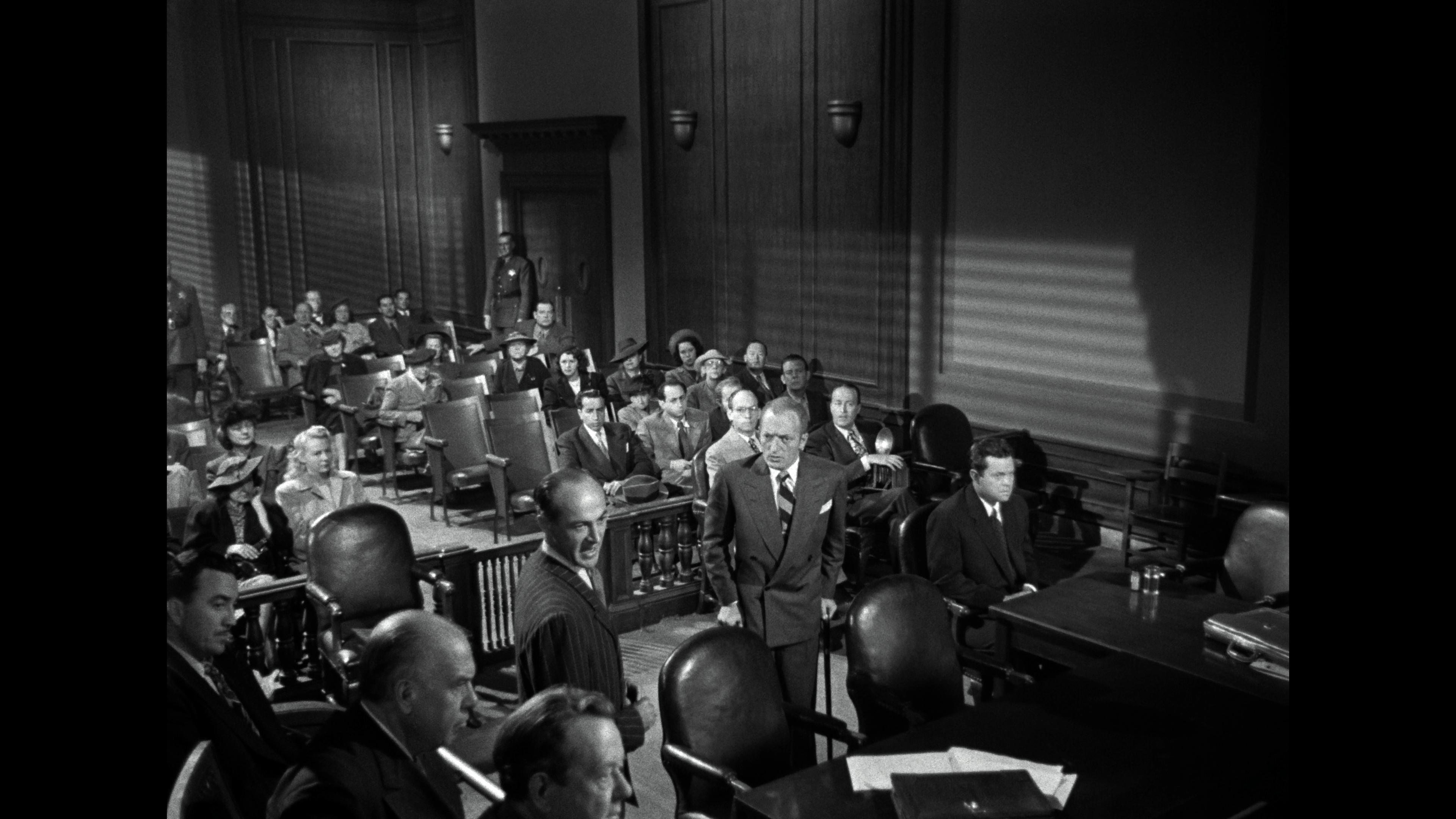
The sequence is so unique and thrilling even casual film buffs are familiar with it, but it's only one of several virtuoso episodes in the movie. A tense, sexually charged encounter at an aquarium, a bizarrely comic criminal trial filled with colorful bits of business by various extras, and a frantic escape and pursuit through the bustling streets of San Francisco's atmospheric Chinatown also bolster the picture's excitement quotient. Just watching these scenes unfold and waiting to see the next Welles-ian touch make The Lady from Shanghai far more interesting and pleasurable than films with more tightly structured and easy-to-follow narratives. You know you're in the presence of genius when you want to constantly hit the pause and rewind buttons so you can savor, analyze, and deconstruct a director's work, and that's exactly what happens here.
The Lady from Shanghai marked the first time since Citizen Kane that Welles was granted complete creative control over a film, and as producer, director, writer, and star he makes the most of the opportunity. He and Hayworth were married at the time, but their union had long since deteriorated, and though the gossip columns claimed their collaboration signaled a reconciliation, nothing could be further from the truth. They remained, however, good friends, and their potent on-screen chemistry belies any simmering animosity. In an audacious, highly publicized move, and much to Harry Cohn's horror, Welles lopped off Hayworth's trademark auburn tresses and bleached the cropped remains a brassy topaz blonde, which enhances her character's icy demeanor and predatory nature. At the time, Hayworth was without question one of the world's most ravishing women, and although many decried her new hairstyle and dye job, Welles so lovingly photographs his leading lady, her allure and beauty are never compromised. (Many of Hayworth's close-ups were studio-mandated and Welles disapproved of them, but they nevertheless serve his film well.)
He also wrings from his estranged wife arguably the most natural and nuanced performance of her career, allowing her to play deliciously against type and giving her a meaty role into which she could really sink her teeth. Hayworth, who heretofore often appeared amateurish in emotive scenes (even in her iconic turn as Gilda), voraciously devours the part, crafting one of cinema's most memorable femme fatales, and that includes Barbara Stanwyck's Phyllis Dietrichson in Double Indemnity and Lana Turner's Cora Smith in The Postman Always Rings Twice.
Based on the pulp novel If I Die Before I Wake (which, according to legend, a desperate Welles agreed to film in order to receive a $50,000 loan from Cohn to sustain his musical stage adaptation of Around the World in Eighty Days as it limped toward Broadway), The Lady from Shanghai chronicles the dark and depraved odyssey of Irish seaman Michael O'Hara (Welles), who cynically narrates the drama and constantly refers to himself as a "fathead," "fool," and "big boob." One evening, he saves a mysterious woman from a Central Park mugging and within 24 hours finds himself aboard her yacht as a crew member. That woman is Elsa Bannister (Hayworth), wife of esteemed criminal defense attorney Arthur Bannister (Everett Sloane), a physical and psychological cripple who keeps a tight rein on his miserable spouse, much to her constant chagrin.
Michael quickly fancies Elsa, who manipulates him with the dexterity of a puppeteer, and as they sail from New York to San Francisco through the Panama Canal and by way of Acapulco, his infatuation evolves into obsession. In order to secure enough cash to run away with Elsa, who can no longer bear her husband's ceaseless gibes and asphyxiating control, Michael accepts a weird and disturbing proposition broached to him by George Grisby (Glenn Anders), Arthur's strange and unbalanced partner. Soon after, everyone's lives spiral out of control, and before long Michael realizes he's only a pawn in a deadly game that doesn't look like it will end well...at least for him.
Welles' original rough cut ran almost twice as long as the final release version, which may account for the finished film's choppy feel. Yet the staccato editing style adopts its own rhythm over time, keeping things off kilter and nicely punctuating the action. The use of extreme close-ups and overlapping dialogue heighten the sense of unease and unpredictability, while location shooting in Acapulco and San Francisco lends the movie a vitality and authenticity other noir films lack. Yes, the story is difficult to follow on a first viewing, but the script is well-written, often lyrical, packed with potent lines ("One who follows his nature keeps his original nature in the end" and "Everybody is somebody's fool" are two memorable examples), and holds up (fairly) well under closer scrutiny.

Unlike adaptations of books by Raymond Chandler and James M. Cain, the plot isn't the movie's centerpiece. The Lady from Shanghai is all about style, mood, and pushing the limits. Welles is the film's star, but his work behind the camera eclipses anything he does in front of it. Adopting a needless Irish brogue that comes and goes like a sea breeze on the yacht, Welles the actor seems stiff and preoccupied. (Who wouldn't be, considering all the hats he was wearing during production?) But as a director, he's fluid and focused, attacking each scene with a muscular vigor that makes his audience sit up and take notice.
Welles also wisely populates the film with a host of terrific character actors, many of whom enjoyed a long history with him. Sloane, who also appears in Citizen Kane, is a riveting presence as Hayworth's bitter, impotent husband who spews venom with sardonic glee, and Anders, as the unbalanced Grisby, files a deliciously quirky performance that enhances the air of unease swirling about the proceedings. Both play grotesque characters that acutely offset Hayworth's smoldering glamor and Welles' naivete. As much as the camera angles and set pieces supply essential atmosphere to the film, so too do these gifted actors.
For some, The Lady from Shanghai may be an acquired taste, a movie that grows on you with each viewing. The more you see it, the more the story becomes irrelevant and Welles' artistry and creativity come to the forefront. Few films of the period take as many chances and succeed so brilliantly, and though it may have taken decades for the critics and public to fully appreciate it, The Lady from Shanghai now receives the lofty respect it has always so richly deserved.
Vital Disc Stats: The 4K Ultra HD Blu-ray
The Lady from Shanghai arrives on 4K UHD packaged in a standard case inside a sleeve with a matte finish. A leaflet containing the code to access the Movies Anywhere digital copy is tucked inside the front cover. Video codec is 2160p/HEVC H.265 with Dolby Vision HDR and audio is DTS-HD Master Audio mono. Once the disc is inserted into the player, the static menu without music immediately pops up; no previews or promos precede it.
Video Review
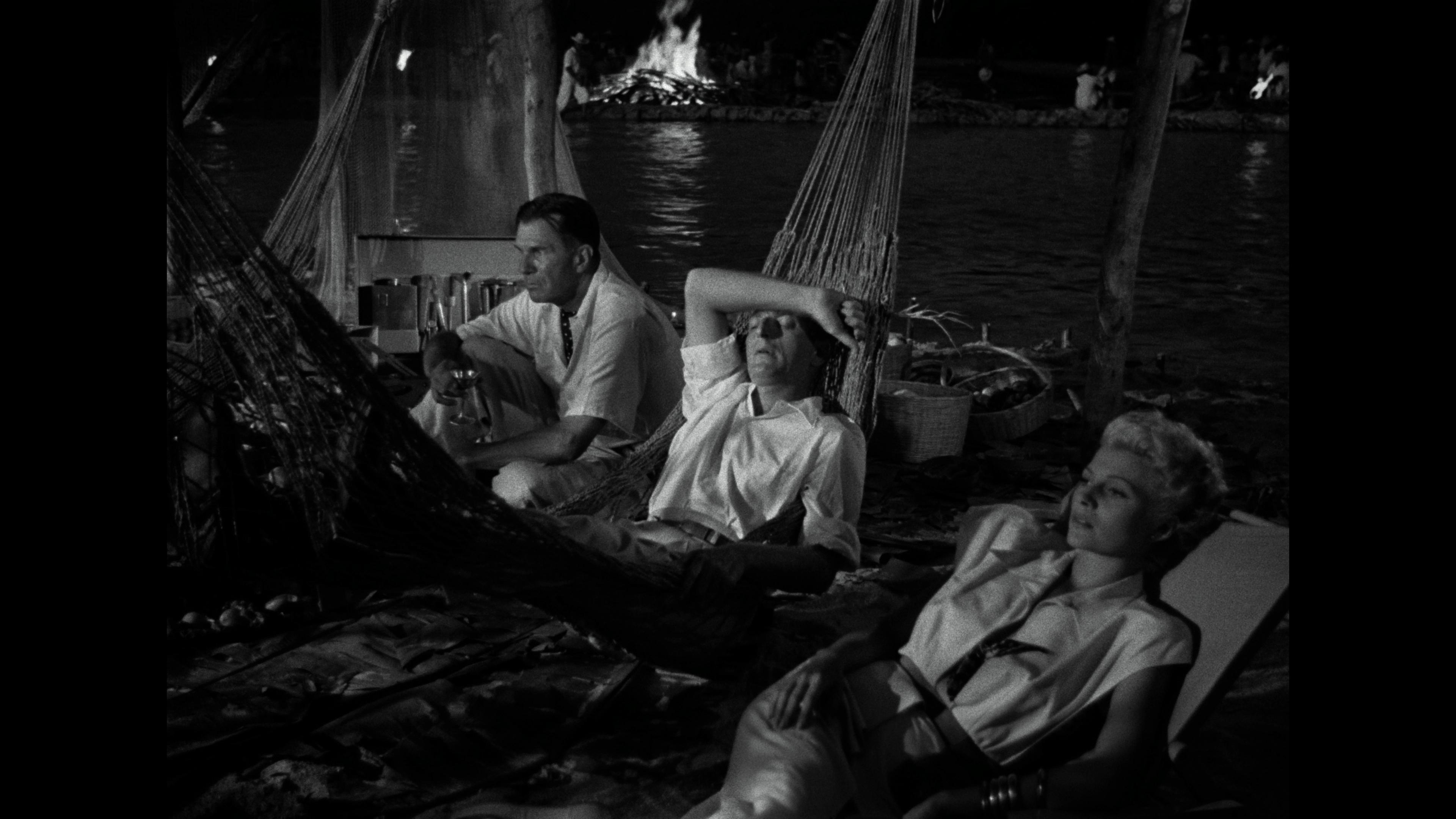
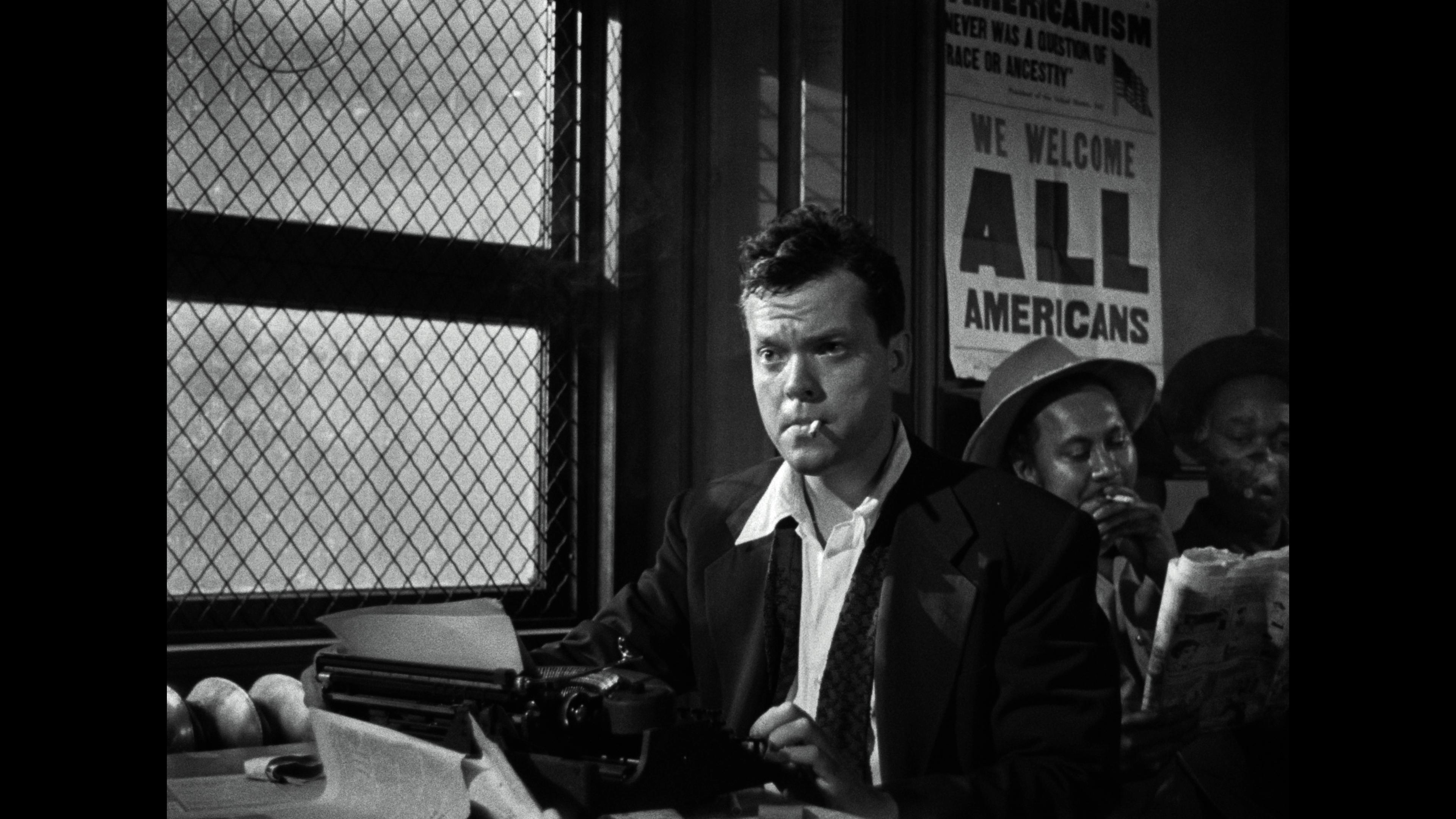
The Lady from Shanghai has been recycled on Blu-ray so many times it's tough to keep up with all the reissues. The latest and best of the 1080p editions came out just last year from Kino Lorber Studio Classics, but this 4K UHD release from Sony that's equipped with Dolby Vision HDR tops them all. From the moment the opening titles hit the screen, the uptick in clarity is instantly evident and the beautiful picture quality continues throughout the 87-minute running time. This does not seem to be a new remaster, but that's not a surprise because the existing 4K master from 2015 still holds up.
The enhanced sharpness, deeper blacks, increased contrast, and more pronounced details all loft this transfer onto a higher plane, but the tweaking has been done with a deft hand and full recognition that maintaining a film-like appearance is vital for noir movies. Grain is still visible, thank goodness, but it's been toned down just a hair, which allows fine details in costume fabrics and patterns and facial features like Everett Sloane's freckles to come to the forefront. The perfectly balanced image sports excellent shadow delineation (another key noir element), finesses processed shots with ease, and produces dazzling close-ups that showcase Hayworth's glamor and spotlight sweat, pores, stubble, and blemishes. Each of these aspects eclipses those on the previous Blu-rays not by a mile, but enough to make a difference and merit an upgrade. The existing Blu-rays are just fine, but if you're a diehard noir aficionado and/or Hayworth and Welles fan, grab this 4K UHD disc.
Audio Review
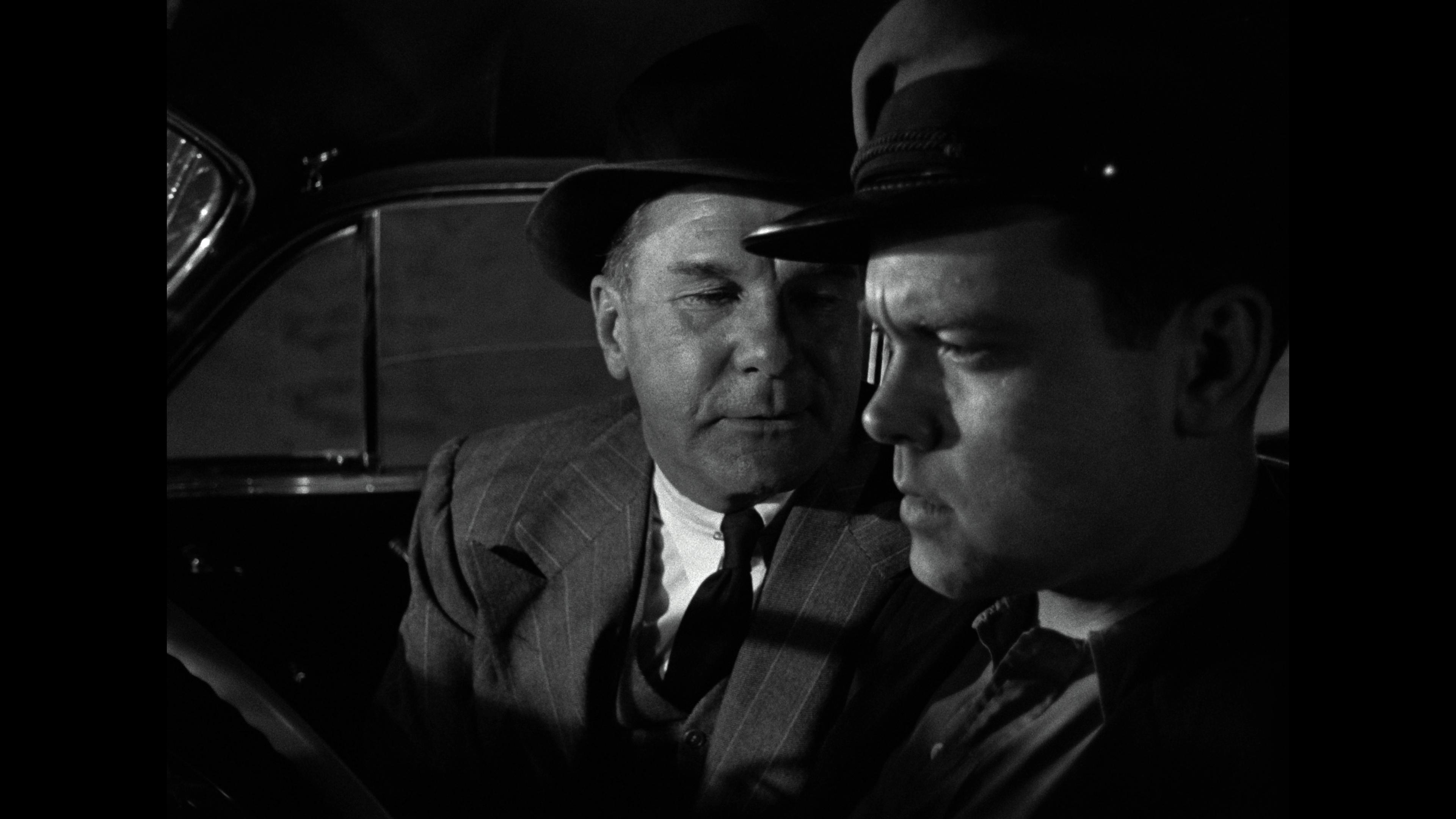
The audio of The Lady from Shanghai has always been problematic, with dialogue the biggest offender. Overlapping exchanges, countless throwaway lines, whispered conversations, and Welles' weird Irish accent heighten the unsettling mood and make the plot seem even more confusing. The sound on the previous Blu-ray releases has been quite good overall, but Sony has somehow managed to further hone the clarity so the dialogue is easier than ever to comprehend and the effects are markedly crisper. The result is a DTS-HD Master Audio mono track that wields palpable impact and more completely complements the eye-popping visuals than any previous track.
The dialogue is definitely better prioritized and the sonic accents like shattering mirrors, gunfire, fisticuffs, and sirens deliver more punch. A wide dynamic scale embraces all the highs and lows of the music score, and though I detected a hint of distortion during a brief segment of Hayworth's song ("Please Don't Kiss Me"), the fleeting anomaly doesn't detract from the overall presentation one bit. No age-related hiss, pops, or crackle intrude either. I was expecting the same-old same-old from this track, but was pleasantly surprised and impressed by the high-quality audio, which ramps up the appeal of this release even further.
Special Features
Only the extras featuring director/film historian Peter Bogdanovich and the original theatrical trailer have been ported over from the 2023 KLSC Blu-ray, so if the additional audio commentaries and featurette with noir czar Eddie Muller are important to you, you'll want to hang onto that release.
-
Audio Commentary by filmmaker Peter Bogdanovich - The esteemed director of The Last Picture Show and several other noteworthy movies was also one of the foremost Welles historians, and this terrific commentary, which he recorded in 2000, focuses almost entirely on Welles. Bogdanovich quotes extensively from both his colorful conversations with Welles about The Lady from Shanghai, Hayworth, Columbia Pictures mogul Harry Cohn, and the story's themes, and a memo Welles sent to Cohn after the film's disastrous first preview in which he expresses his displeasure over the scoring and other audio elements. Bogdanovich also shares some great anecdotes, discusses Welles' personality and the enormous influence Welles had upon his own life, and talks about Welles' "dark, sardonic, satiric" sense of humor and aversion to symbolism. Bogdanovich, who died just a year ago at age 82, ends his thoughtful and engrossing commentary with this line: "I think [Welles] inspired more filmmakers to start making pictures than anybody since D.W. Griffith."
-
A Conversation with Peter Bogdanovich (SD, 21 minutes) - In this 2000 interview, Bogdanovich chronicles the film's production history, talks about the troubled Welles-Hayworth marriage, analyzes various scenes and Welles' style, lauds Welles' artistry, and shares details about Welles' career. Production stills and film clips enhance this absorbing featurette.
-
Theatrical Trailer (HD, 2 minutes) - In addition to the film's original preview, trailers for a few other films featuring Welles and one starring Hayworth are included.
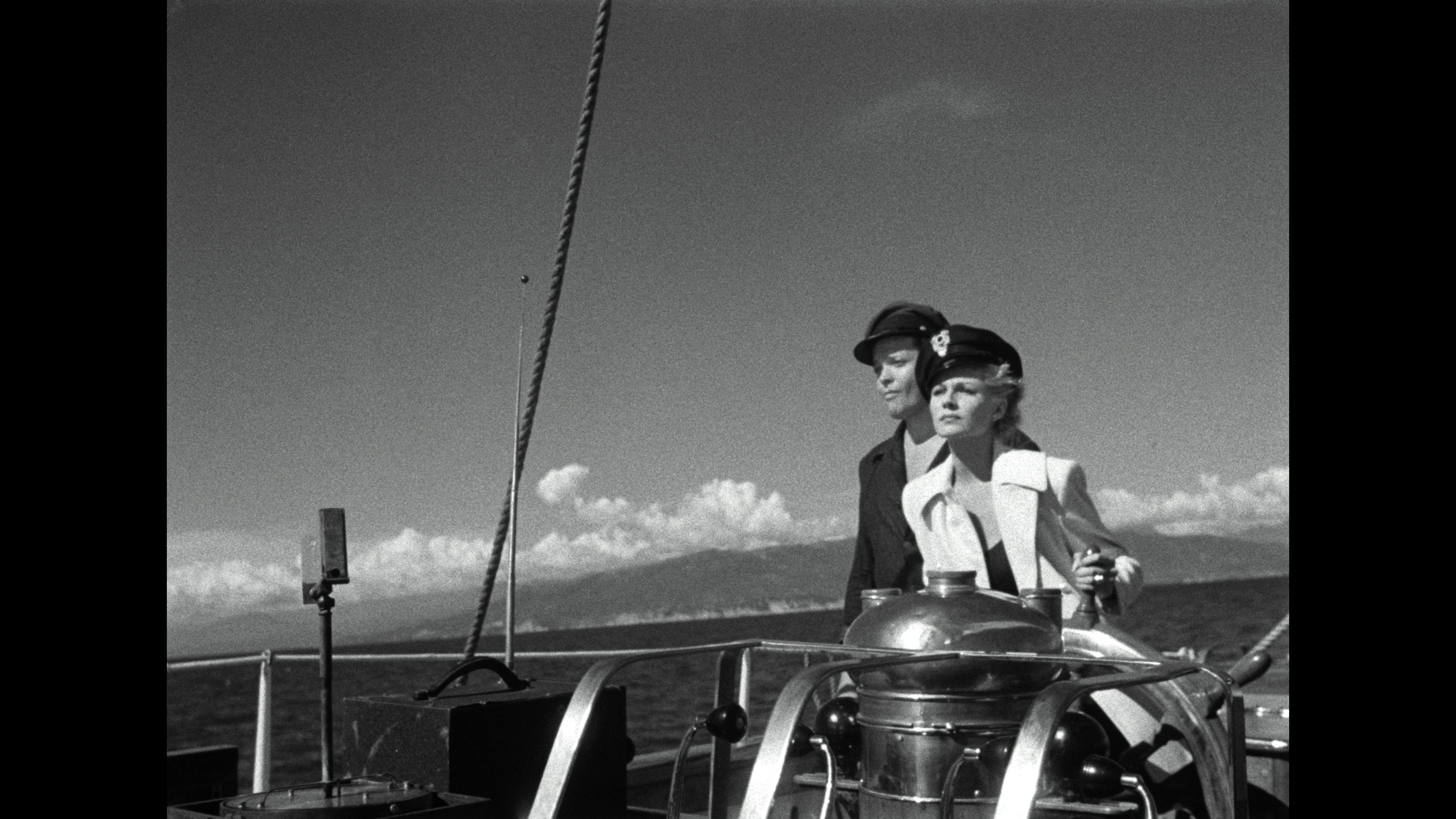
The Lady from Shanghai may be confusing, but its electrifying artistry will leave you dizzy with delight. Orson Welles' iconic film noir remains one of the genre's quintessential specimens and it's a dream come true to see it in 4K UHD. The breathtaking Dolby Vision transfer showcases Hayworth's allure and Welles' artistry, while improved audio ensures we don't miss a single delicious word. Film noir in 4K is still a rarity, so this release from Sony is a treat and hopefully a harbinger of more noir classics to come. Must Own.
-
 Turbine Gasses Up For Texas Chainsaw Massacre 4K UHD Mediabook Legendary BundleBy:
 -
 Strange Bedfellows: Why Horror is a Natural Fit for 4K UHD & Blu-ray Physical MediaBy:
 -
 Turbine Is Back In Action for John Watts’ ‘Clown’ on 4KUHD Mediabook November 13th!By:
 -
 The Horror of 'Clown in a Cornfield' Comes Home With A 4K UHD SteelBook from RLJE Sept. 9th!By: