Christopher Nolan & DGA Launch Campaign Against TV Motion Smoothing
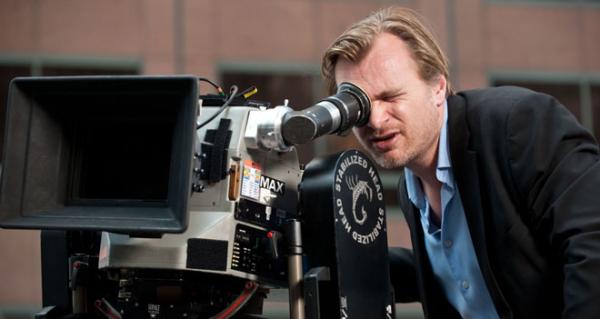
Turns out the Dark Knight director hates motion smoothing just as much as we do.
As reported by Slashfilm, Hollywood is going to war against Motion Smoothing and other inaccurate TV settings. Spearheaded by directors Christopher Nolan, Paul Thomas Anderson, and Johnathan Mostow, the DGA (Directors Guild of America) has reached out to its members and consumer display manufacturers in order to help establish a new "reference mode" for TVs.
Motion Smoothing, otherwise known as motion interpolation or "the first thing I turn off when I unpack a new TV," is a common feature found on many modern displays designed to produce a more fluid and sharp image during motion. To do this, the setting artificially increases the natural 24fps cadence of film content to match the 120 Hz or higher refresh rate of many consumer displays by generating extra frames in between existing ones. Unfortunately, though indeed smoother, this technique typically results in a "soap opera effect" with an unnatural and overly processed appearance that can make movies look like cheap video recordings.
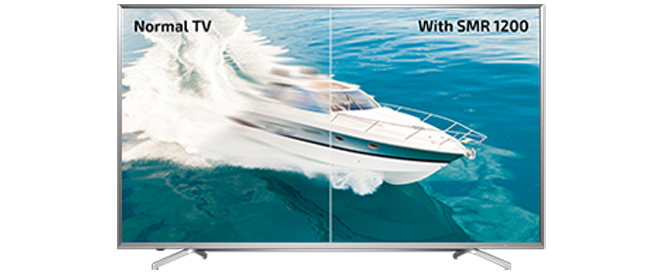
And while this setting can be manually disabled on most TVs, Motion Smoothing is usually turned on by default -- along with several other artificial picture options that result in inaccurately sharpened images and unnatural colors. Unhappy with how their movies are being presented in the home, Hollywood directors are now hoping to help eliminate these settings via a "reference mode" that better represents a filmmaker's artistic intent.
To do this, Christopher Nolan and Paul Thomas Anderson have reached out to TV manufacturers through the UHD Alliance. As a result, the DGA has now sent out a survey to its members in order to help determine what this proposed TV "reference mode" should feature and how it should operate. The answers will then be used to create a set of guidelines for the UHD Alliance to consider.
Here's a rundown of some key questions form the survey obtained by Slashfilm:
- How important is it to you to have a simple way to get consumers’ home TV setup similar to monitors in the color-grading suites for viewing film and television content that YOU created?
- For the following aspects of film and television playback, what elements of creative intent should be maintained in current home displays?
- Motion/frame rate should match the original frame rate (no motion interpolation)
- Home displays should maintain what was seen in the grading suite – in terms of color, brightness, black levels, white point, etc.
- Dynamic range should be preserved – HDR should look like HDR, standard dynamic range should look like standard dynamic range, dynamic range should not be stretched.
- Would you expect this “reference mode” to work for both SDR (standard dynamic range) and HDR (high dynamic range) content or just SDR or just HDR? Please choose one.
- Would you expect this “reference mode” to be called the same thing on different manufacturers of TVs?
Though the concept of a "reference mode" is nothing new -- select displays essentially already offer such a feature via THX, Technicolor Expert, or Netflix Calibrated modes -- the idea of a universal pre-calibrated option across all brands approved by the DGA sounds like a home theater dream come true. Of course, this is only the first step toward making such a feature a reality, but it looks like Nolan and company are helping to steer the industry in the right direction.
Source: Slashfilm
-
 Turbine Gasses Up For Texas Chainsaw Massacre 4K UHD Mediabook Legendary BundleBy:
 -
 Strange Bedfellows: Why Horror is a Natural Fit for 4K UHD & Blu-ray Physical MediaBy:
 -
 Turbine Is Back In Action for John Watts’ ‘Clown’ on 4KUHD Mediabook November 13th!By:
 -
 The Horror of 'Clown in a Cornfield' Comes Home With A 4K UHD SteelBook from RLJE Sept. 9th!By: