Is 4K a Scam?
Many folks obsess over whether or not they're buying "real" or "fake" 4K. Someone asks us about this almost every day. And we get it. We empathize with anyone who dislikes 4K as the nomenclature or branding term or who feels 4K misrepresents the final product.
The box says 4K, but it's a 2K upscale? It's a scam!
The truth is more complicated but, in my sincerest and humblest opinion, focusing solely on source resolution requires ignoring a host of 4K Ultra HD Blu-ray benefits. With this in mind, we thought we'd take a moment to give a little background about 4K, outlining how we got here and everything the format does well, in hopes of clarifying a few misconceptions.
Before we dive in, remember: if you're happy with Blu-ray and HDTV in general, great. Stick with what works for you and/or what fits your budget. However, after three years of testing and comparing, we are confident that 4K is currently the superlative way to enjoy two-dimensional content. Even if it's imperfect at times.

Image Courtesy of Wikipedia. Marked CC0.
What is 4K?
4K actually covers two separate resolutions, which adds some confusion. 4K DCI refers to 4096 x 2160 resolution video. It's the standard for 4K cinema projectors and boasts a 1.85:1 aspect ratio. 4K UHD or Ultra HD refers to 3840 x 2160 resolution video. It's the standard for Ultra HD televisions and boasts a 1.78:1 aspect ratio.
Despite all of the 4K cinema projectors and booming 4K TV sales, many Hollywood productions are still finished at a 2K resolution (2048 x 858 for "Scope" & 1998 x 1080 for "Flat") and then upscaled to 4K Ultra HD for home entertainment purposes.
Why Are They Called 4K Movies If They Aren't All 4K?
In 2015, the Blu-ray Alliance (now the Ultra HD Alliance) branded their new format -- Ultra HD Blu-ray -- around latest-gen Ultra HD TVs. Thanks to marketing, branding, and consumers embracing the language, 4K became the catch-all term for new TVs and physical media / streaming formats.
Speaking of formats, remember this: every home video format has a particular set of specifications and capabilities, but not every release lives up to this full potential. (Remember when Danny Boyle's SD-resolution 28 Days Later got a Blu-ray release?)
This gap between a specific movie and a format's capability is why High-Def Digest exists. We strive to let our readers know what movies and TV shows look and sound amazing so you can make informed purchases.

Is 4K Ultra HD Blu-ray Better than Blu-ray?
There are exceptions, naturally, but almost every single 4K Ultra Blu-ray outperforms its Blu-ray counterpart visually, especially on large displays. They are typically brighter with better contrast and colors and fewer encoding errors.
Why is this? 4K Ultra HD Blu-ray is superior to Blu-ray in several ways regardless of source-material resolution:
- A More Efficient Codec. Ultra HD's HEVC is 25% to 50% more efficient than Blu-ray's AVC.
- Higher Bitrates. 4K UltraHD Blu-ray are encoded at up to 100Mbps versus 40Mbps on Blu-ray.
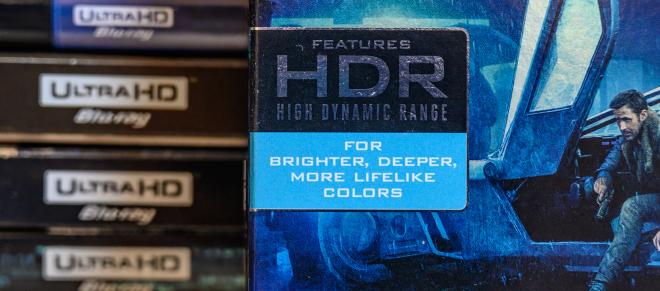
- High Dynamic Range. HDR is technically resolution agnostic, but you won't see it on standard Blu-rays ever. Make sure to read our article What is HDR? for a deeper dive on the tech, but HDR makes the overall image brighter with deeper black levels and more highlight & shadow details.
- 10 Bit / Wider Color Gamut. Blu-ray is an 8-bit technology, limited to the Rec.709 color space, or about 16.7 million colors. 4K Ultra HD Blu-ray is 10-bit video and can display over 1 BILLION colors. The format is capable of Bt.2020 color, but since no current displays achieve this color gamut, studios grade 4K Blu-rays to the DCI P3 color space, which is the same as commercial cinemas.
- Exclusive Sound Formats. While standard Blu-ray has carried Dolby Atmos and DTS:X soundtracks for years, studios like Disney, Fox, and Sony often make Dolby Atmos and DTS:X mixes 4K Blu-ray exclusives.
- Better Source Materials.
- Standard Blu-rays may look terrific on 4K TVs, but it's not the same as a professional 2K upscale. Why? Upscaled 4K Ultra HD Blu-rays come from studio master files, which are uncompressed (or lossless). Those masters look LEAGUES better than Blu-rays with more fine details. How? Compression. Blu-ray is a consumer product; not a professional one.
- Also, many studios are in the (bad) habit of remastering and restoring movies only for a new 4K transfer, leaving the older Blu-ray untouched. While this isn't technically a format-benefit, the reality is, if you want to watch the highest-quality version of your favorite movie, you need 4K.
- Also Worth Noting. Dolby Vision, HDR10, and HDR10+ are HDR formats, encompassing both High Dynamic Range and Wide Color Gamut features. So when someone's talking about "HDR improving color," that's why. We have a full series of articles explain these over HERE.
Is every 4K Ultra HD Blu-ray amazing and a perfect encapsulation of the format's true potential? Of course not. But when you compare the vast majority of 4K Ultra HD Blu-ray's to the same movie's best Blu-ray release, the 4K Blu almost always stands above. And the bigger and more capable you make your display, the more pronounced this visual upgrade becomes.

Is 4K Streaming Better than HD Streaming/Broadcast?
Yup. Outside of the specifics of max bitrates (4K streaming is around 15-20Mbps, not 100Mbps), everything we just covered applies to 4K versus HD streaming. You get a better codec, higher bit rates, HDR, 10bit/wider colors, and access to the latest transfers and source materials. Further, studios tie most Dolby Atmos mixes to 4K productions, 4K-level subscription plans, and/or 4K-capable equipment.
To be clear, where 4K Blu-rays almost always includes HDR, there is a fair amount of standard dynamic range 4K streaming content. Even without the improved colors and contrast, higher bitrates and an efficient codec produce noticeably improved video presentations. This week, for example, I watched AMC's The Terror: Infamy via a DirecTV VR as well as Amazon's The Boys via an Apple TV 4K. Both shows feature dark sequences with lavish production design. Both shows were projected on a 100" screen via the Epson 5050 UB 4K projector. But, where The Terror's HD broadcast was compressed and drowning in encoding errors, The Boys' 4K SDR presentation was crisp and clear and much more akin to watching physical media.
Once you upgrade to 4K streaming, it's hard to watch regular TV, to be honest.
Why Aren't All Movies Finished In 4K?
Time and money. Please pardon the oversimplification, but most Hollywood studios could probably shoulder the cost of further upgrading their post-production pipelines. What they often can't do is give the filmmakers more time. Even with years make a giant production, movies race toward release dates and adding extra rendering time for 4K visual effects could delay productions by weeks or months. It just doesn't make sense. Yet.
And even when it does -- when a movie is finished in 4K -- it often includes 2K visual effects elements that are then upscaled to match the rest of the content.

Why Buy 4K When "All Movies are 2K?"
We see this comment a lot, but it's just not true. Yes, most studio movies are still finished in 2K or include some 2K visual effects, but 4K Ultra HD Blu-ray and 4K streaming offer tons of native and mixed 4K content.
- Catalog Titles. The move to 2K digital intermediates began with movies like Pleasantville and O Brother, Where Art Thou? (though, at the time, movies still printed to film). Simultaneously, cinemas transitioned from 35mm film projection to digital from the early 2000s to total market dominance a few years ago. In other words, most movies made before the early 2000s were finished photochemically and can be scanned at a 4K (or higher) resolution for Ultra HD Blu-ray and streaming releases.
- TV. Here's the big one. Studios have been making TV shows in 4K for a while (Sony started producing TV shows in 4K circa Breaking Bad). With the transition to 4K, most streaming services like Netflix and Amazon finish their original content -- features, series, and documentaries -- in 4K or 4K+HDR.
- Modern 4K Movies. While you probably won't see a Pixar movie rendered in 4K for a long time, studios and indie producers are pushing to finish more movies in 4K. Why? Everyone's going to have their own streaming services and distributors pay more to indie-producers for 4K productions. There's also IMAX productions to consider aka almost everything Christopher Nolan touches. The catch? As pointed out above, even native 4K productions do include 2K elements to save time and money.
In other words, while most features are still 2K upscales, there's a growing collection of native and mixed resolution 4K content you can enjoy right now.
Are There Any Downsides to 4K?
You betcha. The 4K ecosystem is loads more complicated than the HD days, which leads to frustrations and headaches that aren't well suited for non-enthusiasts.
- Expense. If you want to upgrade to 4K, it can be expensive because everything in your a/v chain needs to be HDCP 2.2 compliant or it won't play.
- Digital Gremlins. Even when everything IS compliant, you'll still sometimes get errors and handshake issues. You should also upgrade our HDMI cables because 4K/HDR video and lossless audio take up a lot of bandwidth. Even today I had to drop an AppleTV 4K down to 4:2:0 chroma to get it to play Dolby Atmos with 4K content despite buying a brand new High-Speed HDMI cable.
- Wonky HDR CGI. While HDR formats elevate some visual effects, others become much more transparent and visual, making what was once passable look extra fake and weightless.
- You Need Fast Internet. For 4K streaming, you need fast, reliable high-speed Internet. And even if you have this, sometimes you get buffering and slow loading errors. Such is life in the 21st century.
- Not All 4K TVs Are Worthy. If you buy the wrong 4K TV or fail to engage a flagship 4K TV's proper settings, you'll probably hate 4K. In the Blu-ray days, a mediocre TV might not look amazing, but it was still a sharp, clean, visible image. If you buy a mediocre 4K TV -- too dark, poor contrast, an 8-bit panel, or no HDR -- or you mess up your settings, 4K movies can look like absolute trash.
Make sure to read our constantly updated Best Gear List to see budget-friendly and flagship TVs worth your money - It's Not Always Backward Compatible. In our testing, downconverting 4K movies to HDTVs resulted in HDR-encoding errors, which darkened the image, crushed black levels, and blew out highlights. Personally, I don't recommend playing 10-bit material on 8-bit panels. However, after this article was first published, a few readers shared stories of getting high-quality HD presentations out of 4K discs, so this too is not cut-n-dry. In other words, results will depend on the equipment involved.
- Blu-ray CAN be Good Enough. If you have a medium or smaller TV (below 55", give or take) or don't have an amazing TV with wide color gamut and HDR, it might be best for you to stick with Blu-rays which, as we've discussed, upscale nicely and still look great. Again, if you're happy with this format, stick with it.
Final Thoughts
We get asked about real and fake 4K almost every single day here at High-Def Digest. And while we empathize with folks who demand a format live up to its promised specifications, the reality is more complicated than binary categories like real or fake. While it's easy to blame 2K resolution for rubbish 4K Ultra HD Blu-rays, we've seen native 4K Blu-rays that look mediocre thanks to flawed source materials, and we've seen upscaled 2K transfers that set benchmark reference-quality visuals.
The point is this: we measure 4K Ultra HD Blu-ray and 4K streaming quality by the sum of their parts -- resolution, fidelity, color, contrast, black levels, specular highlights, shadow details, and so on -- not just one aspect. Again, this is why we're here. To help tell home theater enthusiasts discover the absolute best 4K content while avoiding the worst.
Cheers & thanks so much for reading.
-
 Turbine Gasses Up For Texas Chainsaw Massacre 4K UHD Mediabook Legendary BundleBy:
 -
 Strange Bedfellows: Why Horror is a Natural Fit for 4K UHD & Blu-ray Physical MediaBy:
 -
 Turbine Is Back In Action for John Watts’ ‘Clown’ on 4KUHD Mediabook November 13th!By:
 -
 The Horror of 'Clown in a Cornfield' Comes Home With A 4K UHD SteelBook from RLJE Sept. 9th!By: