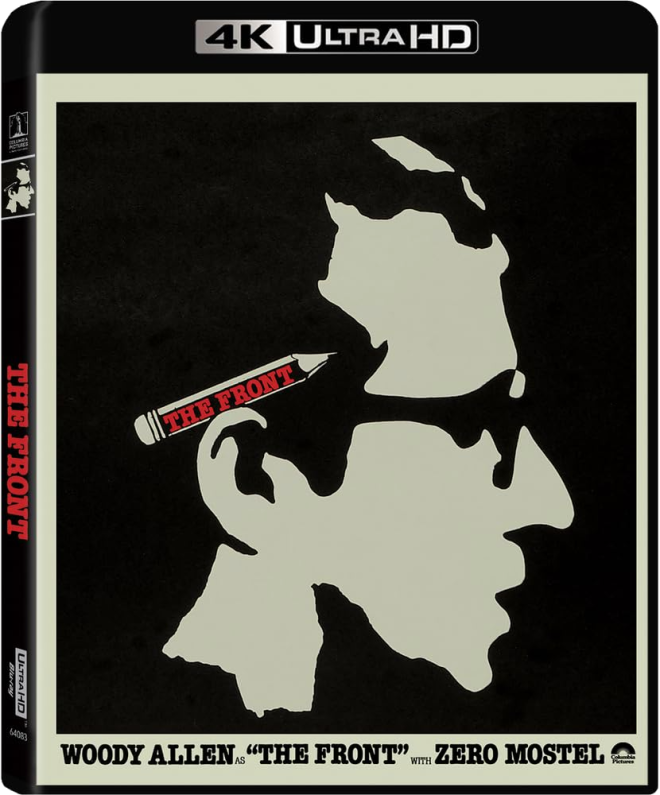
The Front: 50th Anniversary 4K Ultra HD Blu-ray
As long as everyone is getting what they want, what’s a little deception in the face of tyranny? Woody Allen headlines director Martin Ritt and writer Walter Bernstein's tragic comedy The Front. Inspired by their own time on the infamous blacklist, the film anchors on Allen’s neurotic persona as a vapid shill juxtaposed with a heart-wrenching turn from Zero Mostel. Sony gives the film a fitting 4K UHD release with an excellent Dolby Vision transfer, strong audio, but still rather light on extras. Recommended
Click to Order:

Storyline: Our Reviewer's Take
This is an instance where I will flatly say “thank God, David Krauss already reviewed this film!” Not that I think I wouldn’t be able to do The Front justice, but he has an eloquent quality to his wording that my bluntly sardonic tendencies would fail to communicate. For my own sake, I find the film fascinating, hilarious, and tragic all in one run. In my younger years, I was a stalwart Allen fan, and on my first viewing, I found The Front to be a welcome, refreshing piece where he was only the actor and not the creative driving force.
As I’ve revisited the film a couple of times in the last two decades, I think Allen’s participation is the weak spot (and not because of his notable personal issues). Because Woody Allen is who he is, he brings this sort of fastidious personality to every film he’s in. Even in 1976, you couldn’t be blamed for wrongly assuming he wrote and directed The Front. This isn't to say he's bad in the film or doesn't do the character justice. During this latest viewing, I couldn’t shake the idea that Alan Alda could have been a great Howard Pince. He’s lanky enough to play awkward but suave enough to deliver a shill-type character with a wormy sort of confidence, but then have the confidence to deliver one stinger of a final line during the film's climax. An interesting “what if?” As is, The Front remains a terrific piece of work, a relevant reminder of past disgraces at a time when small men would stoke and exploit fear to make themselves look bigger and more important than their meager accomplishments could support.
Here’s what Mr. Krauss said way back in 2014 for The Front Twilight Time Exclusive:
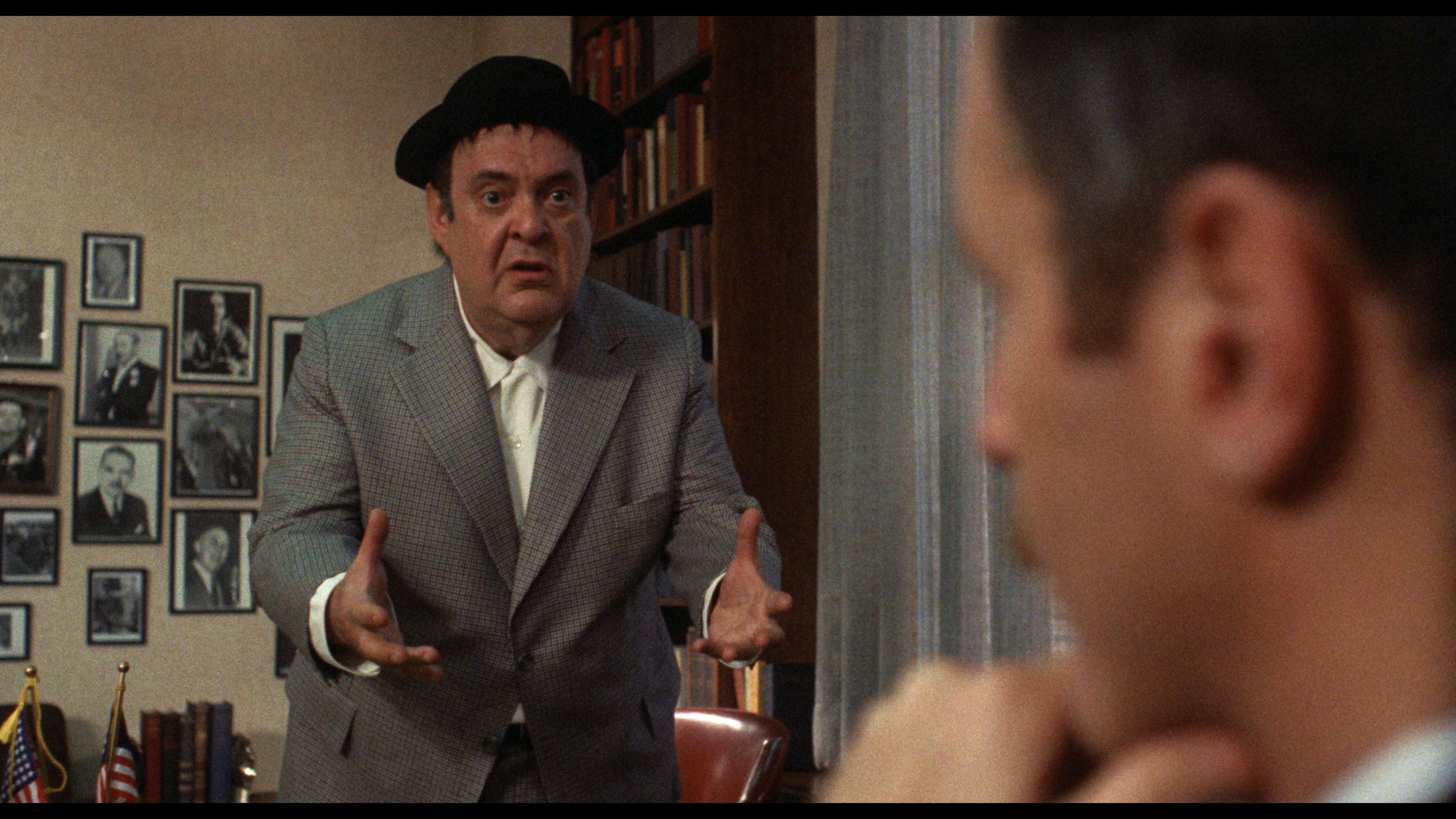
It's not often Woody Allen relinquishes creative control and stars in a movie he hasn't directed or written, but he cared enough about the subject matter of 'The Front' to put himself in someone else's hands. Those hands belonged to director Martin Ritt and writer Walter Bernstein, and their incisive, darkly funny, yet predominantly serious look at the Communist witch hunt and blacklist that rocked the film and television industry in the 1950s stands as both a searing and inspiring testament to those who endured the bullying and harassment of a venomous organization and emerged with their integrity and principles intact. Yet the salute to those who persevered - as well as those who were destroyed - is not confined to the characters who populate the screenplay; it also extends to some of the cast and crew - most notably Ritt and Bernstein - who were themselves blacklisted by the House Un-American Activities Committee for their supposed Communist sympathies and refusal to identify colleagues who might have a tangential affiliation with the party. Such an intimate connection heightens the material's impact and makes 'The Front' one of the most important films to tackle one of the most shameful episodes in American history.
Much more sedate than most Woody Allen pictures of the period, 'The Front' uses humor judiciously as it strives to paint an accurate portrait of a turbulent era. It's unfathomable to think a number of American artists lost their livelihood and were forced to work underground, or not at all, simply because they signed a petition or marched in a parade two decades before, especially in a country that prides itself on advocating and protecting civil liberties. Looking back, it's easy to classify the paranoia and fear that gripped the nation in the 1950s as comical, and Ritt and Bernstein do an excellent job depicting this almost surreal atmosphere and infusing just the right amount of jocularity into it. Most of the one-liners in 'The Front' not only provoke laughs, but also act as potent zingers that skewer the outrageous ideals that inspired such evil in the name of patriotism.
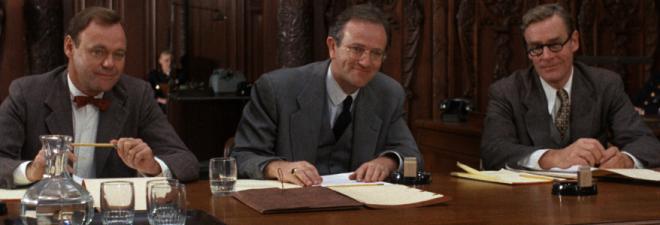
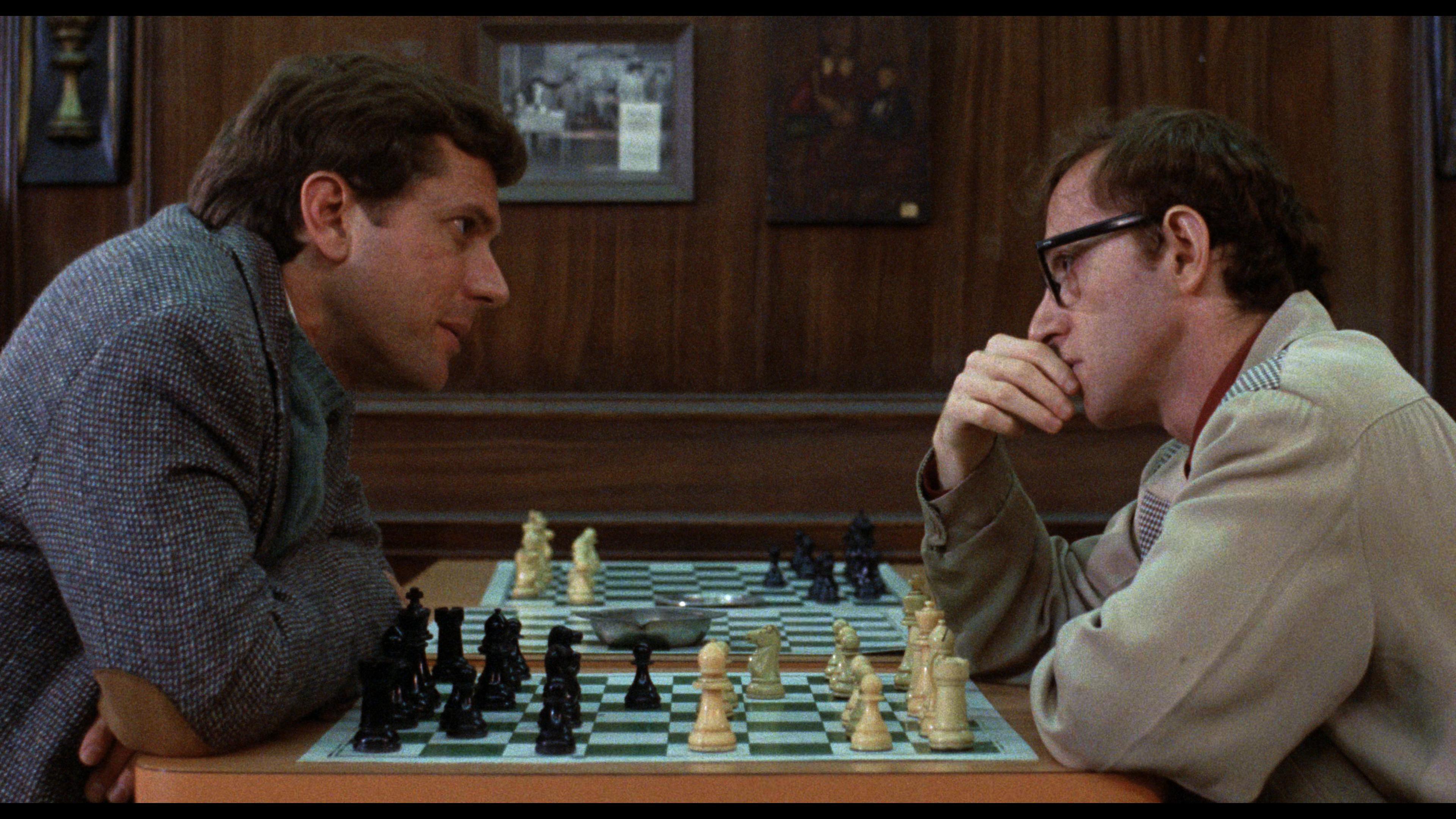
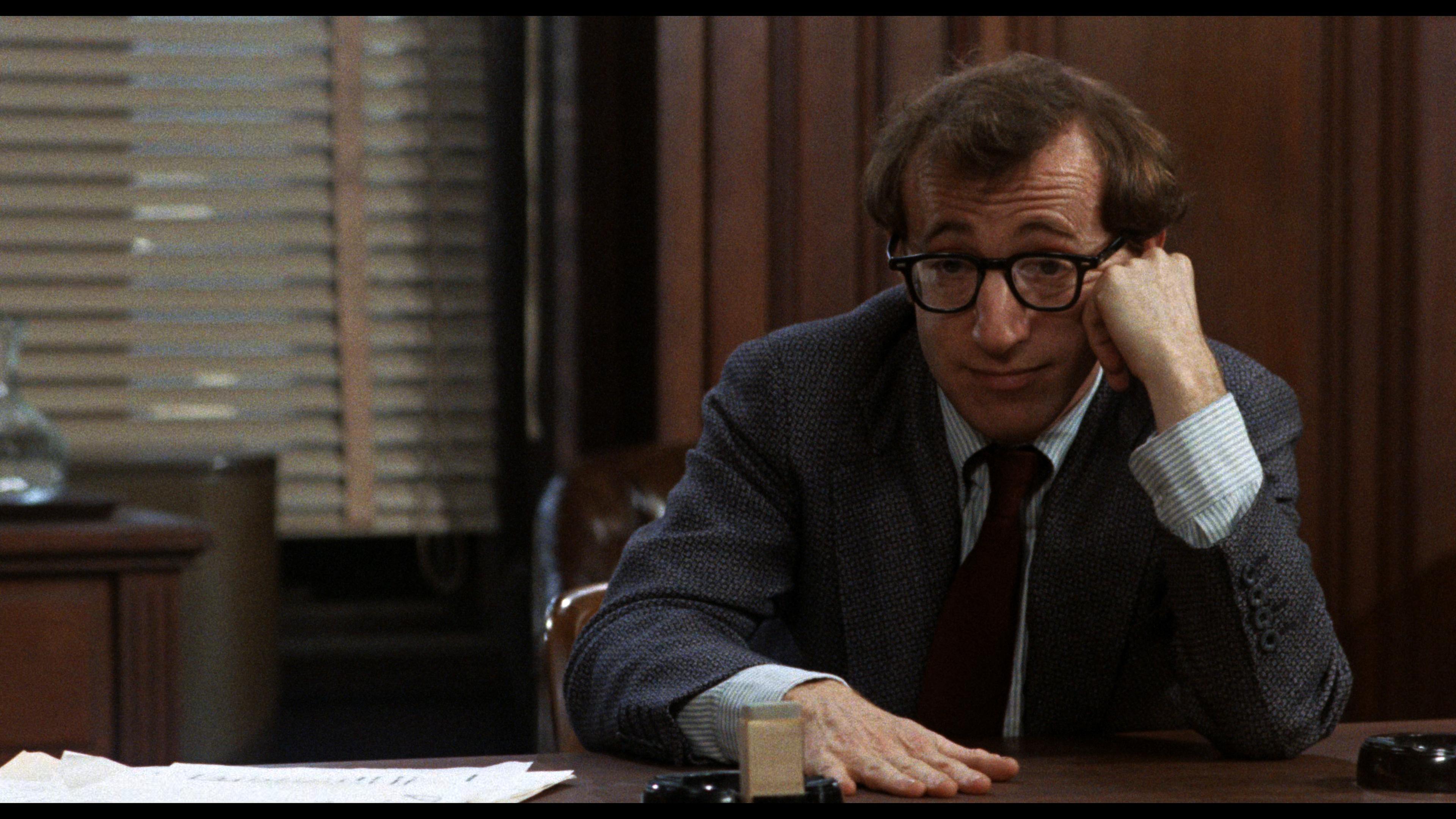
After an affecting montage of black-and-white newsreel clips from the early 1950s, featuring images of such icons as Senator Joseph McCarthy (at his wedding, no less!), Presidents Harry Truman and Dwight D. Eisenhower, baseball great Joe DiMaggio, and sex symbol Marilyn Monroe - all set to the mellifluous vocals of Frank Sinatra crooning 'Young at Heart' - we zero in on the modest, brainless existence of mild-mannered Howard Prince (Allen), who blithely toils as a New York City diner cashier. Not much fazes or excites Howard, but his life changes drastically when his former school chum Alfred Miller (Michael Murphy), a successful television writer, loses his job on a weekly anthology series and winds up on the blacklist. The desperate Alfred, who hopes to continue working, suggests Howard act as his "front" - meaning Alfred will still write his scripts as usual, but Howard - for a 10% cut - will put his name on them and pass them off as his own. Eager to help out his friend (and pay off some gambling debts), Howard accepts the offer, and soon becomes a TV bigwig, earning a stellar reputation as a top-notch scribe and winning the affection of a young, idealistic production assistant, Florence Barrett (Andrea Marcovicci), who admires his (fake) intellect, (fake) talent, and (fake) character. Soon, other blacklisted writers approach Howard, and he acts as their front as well.
Howard also becomes pals with a renowned comedian, Hecky Brown (Zero Mostel), who appears on the show for which Howard "writes." Government investigators, however, uncover questionable events in Hecky's past, and the network, afraid of a possible scandal and audience and sponsor erosion, fires him from the cast. Florence quits in protest, and soon the politically neutral Howard begins to develop a social conscience, which is put to the test when the committee calls him to testify and puts pressure on him to name names.
Bernstein's original screenplay nabbed the movie's only Oscar nomination, and the manner in which it mixes comedy, angst, and heartache against the backdrop of an intellectually absurd yet frighteningly real situation is inspired. Several of the characters are modeled after real people, including Bernstein himself (he's the ulcer-ridden Alfred), and a few scenes are based on actual events, which lend the proceedings an admirable air of authenticity. Though Hollywood doesn't usually mind self-reflexive films that shine an unfavorable light on the industry, there's something so distasteful and embarrassing about hanging so many talented and hard-working professionals out to dry that it's surprising a major studio would produce a picture that focuses on such contemptible acts of betrayal. Humor sugarcoats the subject to a certain degree, as does the air of nostalgia that permeates Ritt's storytelling technique, yet a sharp edge consistently pokes through and drives many critical points home.
Allen embraces his more subdued role, though he still pretty much portrays himself - or, more accurately, his screen persona. Always the nebbish, Allen underplays well, which allows his ultimate growth and enlightenment to more fully resonate, yet plenty of comic moments nicely shade his portrayal. Mostel, who was also blacklisted during the 1950s, fully embodies Hecky, which remains one of his most memorable parts. His manic energy and theatricality suit the character and make his trials and tribulations doubly affecting. As Allen's activist girlfriend, Marcovicci is a vision of loveliness, but lacks the spunk a stronger actress would bring to the role. And yet it's refreshing to see Allen play opposite someone other than Diane Keaton or Mia Farrow, and his oil-and-water chemistry with Marcovicci somehow works.
'The Front' may not be remembered as one of Martin Ritt's or Woody Allen's finest films, but it's a notable work that documents a troubling time in a deceptively direct and probing fashion. Sometimes a masterfully crafted quip cuts quicker to the heart of a matter than protracted drama, and that's certainly the case here. 'The Front' is seriously funny in the truest sense of that phrase, and it makes sure we will never forget the pointless suffering so many innocent people endured during a hopelessly naive age.
Vital Disc Stats: The 4K Ultra HD Blu-ray
After 12 years on the physical media disc blacklist, Sony does the right thing, giving The Front its due return as a single-disc 4KUHD + Digital release. Pressed on a BD66 disc, the disc is housed in a standard case with identical slipcover artwork. The disc loads to a static image main menu with standard navigation options.
Video Review
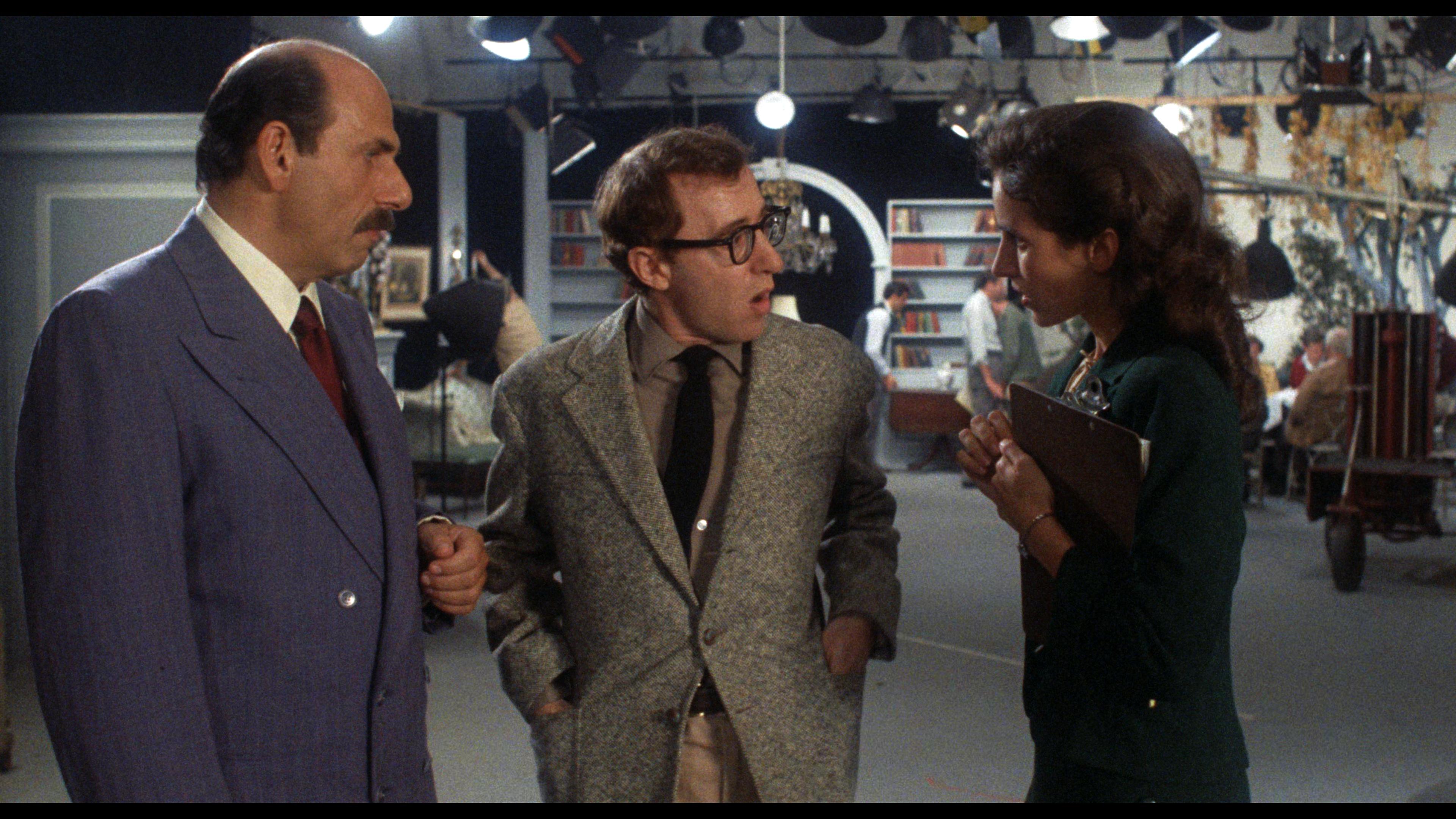
Entering the scene with a 2160p 1.85:1 Dolby Vision transfer, The Front comes to 4K in terrific form. From the dark delis to the bright lights of the studio, the film looks terrific, showcasing that distinct Michael Chapman photography. Facial features, the 1950s period-style clothing and costumes, the production design, and decor are all on display. This has never been a bright or cheerful film, so when we enter the drab spaces of Howard meeting with his literary conspirators or when he’s in bright, colorful spaces going on dates with Florence, the transfer handles the shift nicely. The Dolby Vision grade isn’t overly aggressive but offers nice highlights for colors, black levels, and contrast. The Twilight Time disc was already excellent; I hadn’t looked at it in years. But this disc offers a notable upgrade all around while ensuring fans can pick it up on disc.
Audio Review
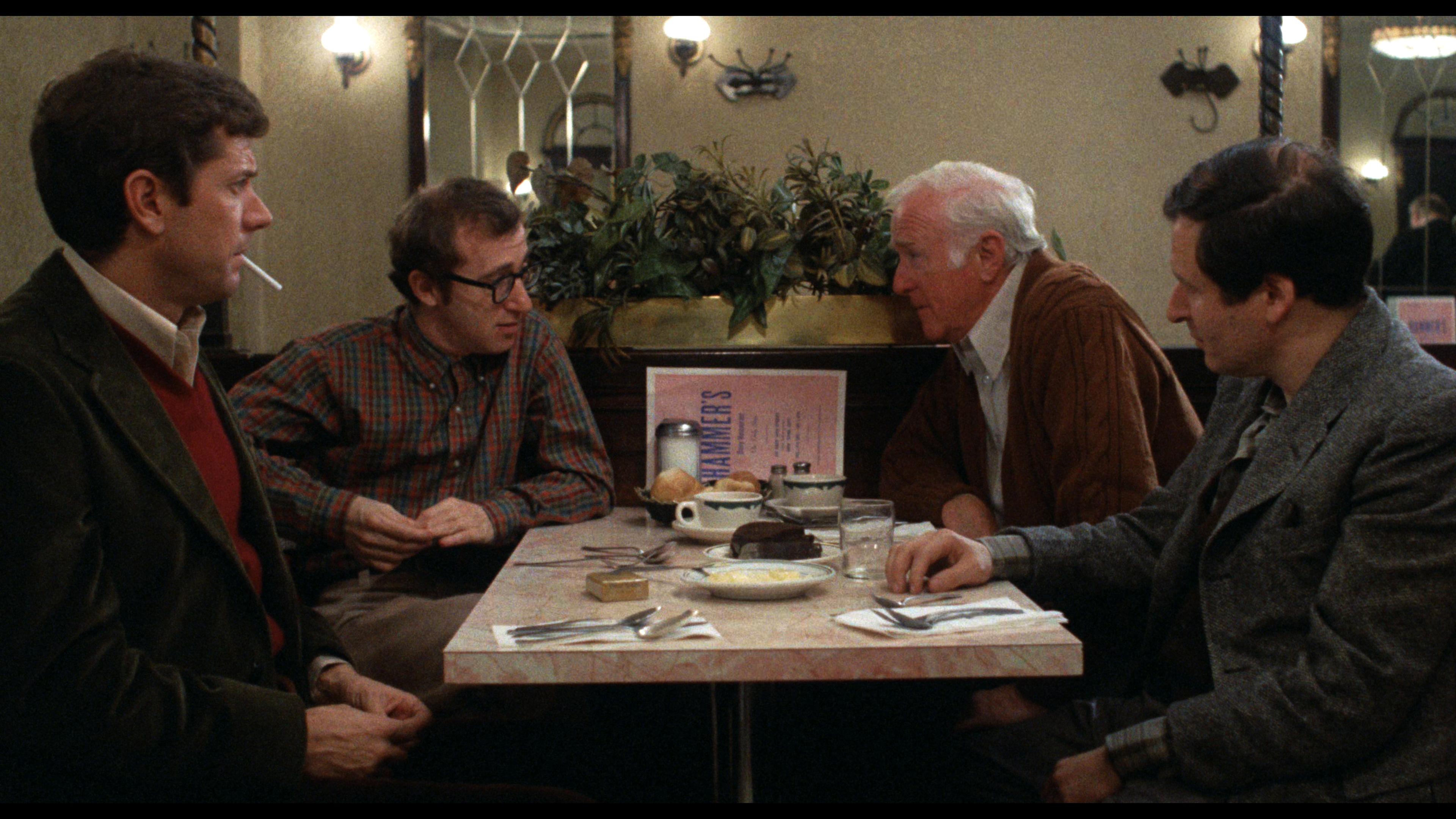
For this round, we have a DTS-HD MA 2.0 mono track instead of the true 1.0 mono mix of the Twilight Time disc. The difference? Not much from what I could hear outside of the channel spacing. As a fast-talking feature, the dialog is clean and clear without issue. Background effects are nicely spaced, giving you that sense of dimension in any given location. Music cues are well appointed without any trouble there. All around, a very good track.
Special Features
As far as extras go, we have the return of that old Nick Redman and Julie Kirgo with actress Andrea Marcovicci track. It’s a nice, lively conversation. I always liked the Redman/Kirgo collaborations, but their tracks were always better when they had another participant in the room draw insight from.
- Audio Commentary featuring Andrea Marcovicci, Nick Redman, and Julie Kirgo
- Theatrical Trailer
50 years later, The Front remains a hell of a film. On the surface, Director Martin Ritt and his writer Walter Bernstein crafted a wily screwball comedy of sorts with Allen in the lead, but given the subject matter, they anchored the piece in their own personal tragic experiences surviving the Blacklist. This comedic tragedy is beautifully personified by Zero Mostel (who was also blacklisted) in his Oscar-worthy performance as Hecky Brown. The film might not be the overwhelming success it aimed for, but when it works, it’s a terrific piece of poignant storytelling with a razor-sharp comedic edge. Now the film returns to disc with a splendid 4K UHD release from Sony. The new Dolby Vision HDR transfer is a fresh visual upgrade that stays true to the film while ushering the feature onto 2160p with a fine audio mix to match. Extras are still slim, but it’s nice to have the older commentary track again. Not gonna name names, but I'm calling this one Recommended
-
 Turbine Gasses Up For Texas Chainsaw Massacre 4K UHD Mediabook Legendary BundleBy:
 -
 Strange Bedfellows: Why Horror is a Natural Fit for 4K UHD & Blu-ray Physical MediaBy:
 -
 Turbine Is Back In Action for John Watts’ ‘Clown’ on 4KUHD Mediabook November 13th!By:
 -
 The Horror of 'Clown in a Cornfield' Comes Home With A 4K UHD SteelBook from RLJE Sept. 9th!By: