The Man Who Could Cheat Death - 4K Ultra HD Blu-ray
Death stops but for one man, Anton Diffring, in Terence Fisher’s 1959 Paramount/Hammer co-production The Man Who Could Cheat Death! Thanks to Vinegar Syndrome this classic Hammer horror creeper takes the stage on 4K UHD with both the Continental and Uncensored versions in beautiful Dolby Vision with excellent audio and a host of terrific new and extras! Recommended
Order from Vinegar Syndrome
Storyline: Our Reviewer's Take
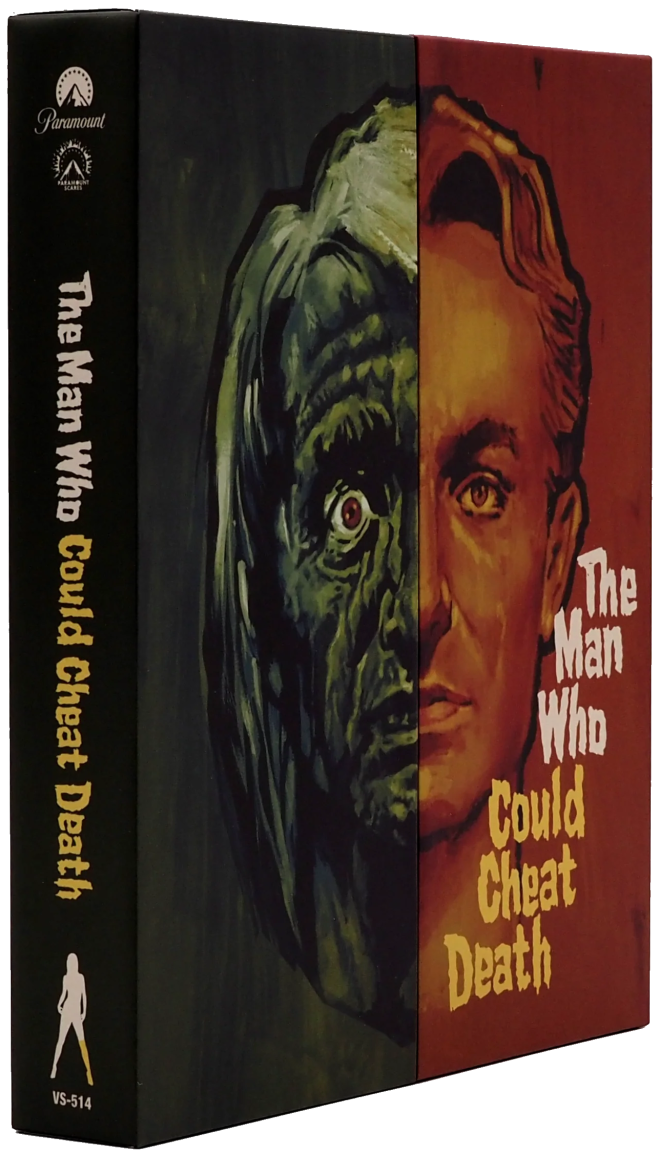
About eight years ago, I reviewed Terence Fisher’s The Man Who Could Cheat Death when KLSC released the film on Blu-ray. Now, nearly a decade later, I get to check out this often underappreciated gem in a whole new light - or resolution, rather. Hammer and 4K seem to be welcome bedfellows these days as these classics once again storm their way onto disc for a legion of collectors to devour. For this release of The Man Who Could Cheat Death, the duty fell upon Vinegar Syndrome to deliver the goods.
On top of a terrific 4K transfer (more on that in a moment), Vinegar Syndrome is presenting the film in two versions that haven’t seen the light of day in decades. First is the so-called “Uncensored” version. This is essentially the same film we all know, except for some additional seconds of gnarly footage for the horrifying climax. Then we come to the “Continental” or “Nude” version of the film. This version hasn’t been seen since its European theatrical release and was only recently rediscovered in the vault at Paramount. It isn’t an altogether different cut of the film, but it offers an alternate reframing of a bare-breasted Hazel Court as she models for a sculpture. Ultimately, these two versions represent the same film we already knew, with slightly different updates, so to speak, that don’t alter the course of the story.
As I previously reviewed this film, I don’t have any alternate thoughts to offer. It’s still a briskly-paced, creepy piece of late 1950s body horror. Here’s my review from 2017:
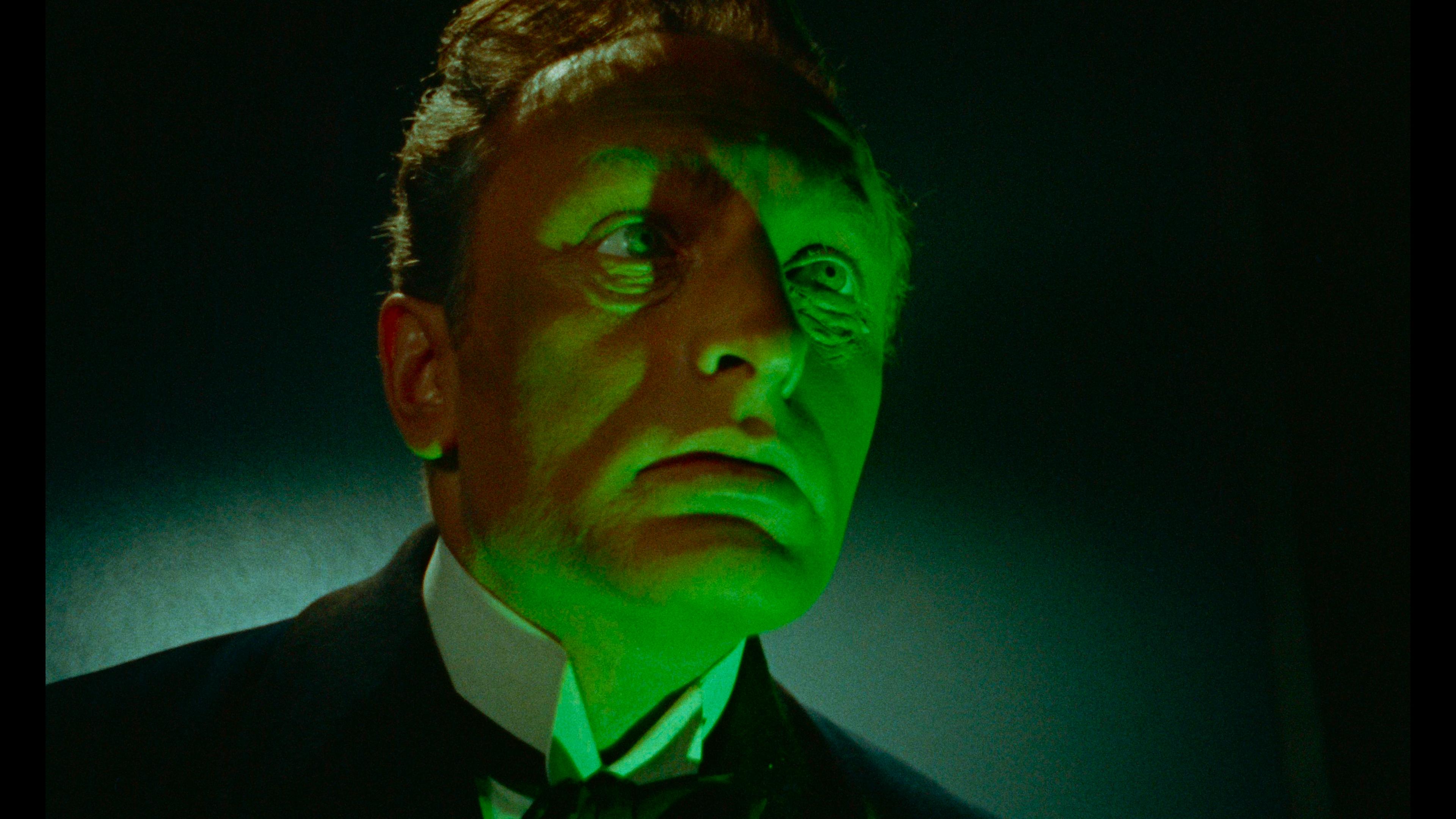
Body Horror is quite possibly my favorite sub-genre. This idea that the vessel that facilitates our day-to-day lives could turn on us and become a monster, or cause us to become monsters ourselves. It's why movies like David Cronenberg's 'The Fly' or, to a certain extent, 'Alien' remain terrifying experiences for me, no matter how many times I see them. It's also why I love stories like Oscar Wilde's 'The Picture of Dorian Gray' and Mary Shelley's 'Frankenstein,' the idea that we can be our own worst enemies in a quest to get the most out of life and become addicts. Hammer's 1959 film 'The Man Who Could Cheat Death', from veteran director Terence Fisher, plays with all of these themes to create a chilling and effective horror picture.
Dr. Georges Bonnet (Anton Diffring) is young, handsome, youthful, and yet experienced in ways beyond his years. He's a doctor with a vast, seemingly impossible knowledge of medicine for a man so young. He's also an accomplished sculptor, capturing the likenesses of Parisian society's most beautiful women in clay. As the lovely Janine Du Bois (Hazel Court) recently posed for him, she grew to love the enigmatic man. While Dr. Bonnet may be a picture of health and vitality, things are not what they seem. Some would estimate his age at 35, no more than 40, but Bonnet has loved for over 104 years. For decades, he's survived through an experimental procedure that replaces an important gland every 10 years. With time running out, Bonnet survives by drinking a mysterious green liquid that is slowly causing him to go insane. When his old colleague Dr. Ludwig Weiss (Arnold Marlé) is no longer able to perform the gland replacement, Bonnet must enlist the help of esteemed surgeon Dr. Gerrard (Christopher Lee). With an intrepid inspector (Francis De Wolff) investigating a mysterious string of murders, time and mortality may have caught up to Dr. Georges Bonnet.
'The Man Who Could Cheat Death' is a terrific entry in the Body Horror sub-genre. The film plays with the ideas of ego and the horrors of immortality while also playing to a traditional serial killer thriller story model. Every ten years, Bonnet must kill in order to survive, and his victims tend to be the beautiful young women who recently posed for a statue. It's a chilling idea in its own right, but then we get to follow Bonnet's descent into madness. Where we initially could almost sympathize with a man, a victim of his exploitation into God's domain of doling out life and death, we quickly become repulsed as the true monster emerges.
Director Terence Fisher, working from a script by Jimmy Sangster, takes the Barré Lyndon play and casts it perfectly within the realm of a traditional Hammer horror film. We have longtime studio stalwarts like Christopher Lee, Arnold Marlé, and Francis De Wolff to set the scene with a bit of familiarity, but it's character actor Anton Diffring who steals the show. At first, he pays his Dr. Bonnet as a sort of dandy, a bit of an egotist who turns his nose up at people. It's a comical bit of overacting, but when the character's addiction to the green liquid grows and he starts to see his own mortality looking back at him, Diffring ratchets up the insanity and creates a uniquely human monster. The monster is just a man who wants more life and is ironically willing to kill anyone to guarantee his prolonged existence.
At a brisk 83 minutes, 'The Man Who Could Cheat Death' thankfully doesn't overstay its welcome, nor does it speed things along too quickly. As the film plays equal parts of 'The Picture of Dorian Gray' and 'Frankenstein' with a dash of vampire lore for flavor, the focus isn't so much about the bloodletting but the race against time. We have our hero surgeon racing to save his love and a monster running to beat his mortality. The results are engaging and damn creepy, with a rather shocking end that doesn't let the audience have that final peaceful coda. The film socks you in the gut and leaves you there in the mess. It's a hell of a creepy little movie, and I enjoyed every minute of it.
Vital Disc Stats: The 4K Ultra HD Blu-ray
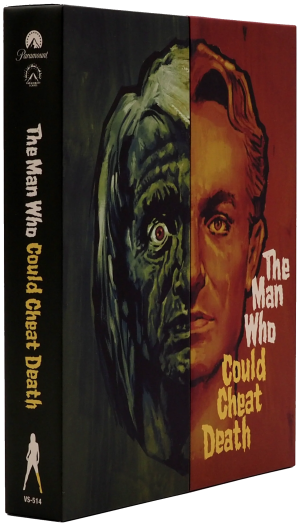
The Man Who Could Cheat Death arrives on 4K UHD with a deluxe 2-disc release from Vinegar Syndrome. The 4K is pressed on a BD66 disc with a Region A BD50 serving the 1080p and the bulk of the extras. The discs are housed in a standard black two-disc case with reversible insert art and a slipcover. Also included is a booklet with several great essays, but I must say the Orange/Red lettering on black paper wasn’t a good choice for readability. The whole package arrives in a slick hard stock slipcase.
Video Review

With a fresh scan and restoration, The Man Who Could Cheat Death is more than ready for his day in the 2160p 1.66:1 Dolby Vision sun. Improvements over the older KLSC disc are immediate. Optical transitions and the opening credits still display some harsh edges and thicker grain, but every other moment of the film is practically pristine. There are occasional soft shots to hide some of the more extreme gore, or when an actor or actress just slightly misses their mark, but those are few and hardly distracting. Details are beautifully crisp and clean, and close-ups are especially impactful. The period costuming and set design all get their due. Makeup effects, especially during the big finale, are appropriately ghastly and quite the sight in 4K. The Dolby Vision grade offers nice accents to the bold colors, deep blacks, and shadows, and contrast. Skin tones look natural and healthy (as much as they’re supposed to). The footage for the alternate framing for the “Continental” version is a little bit rougher around the edges compared to the same scene in the “Uncensored” version, but not distractingly so since each beat is just a few seconds long. Otherwise this is an often glorious and striking transfer.
Audio Review
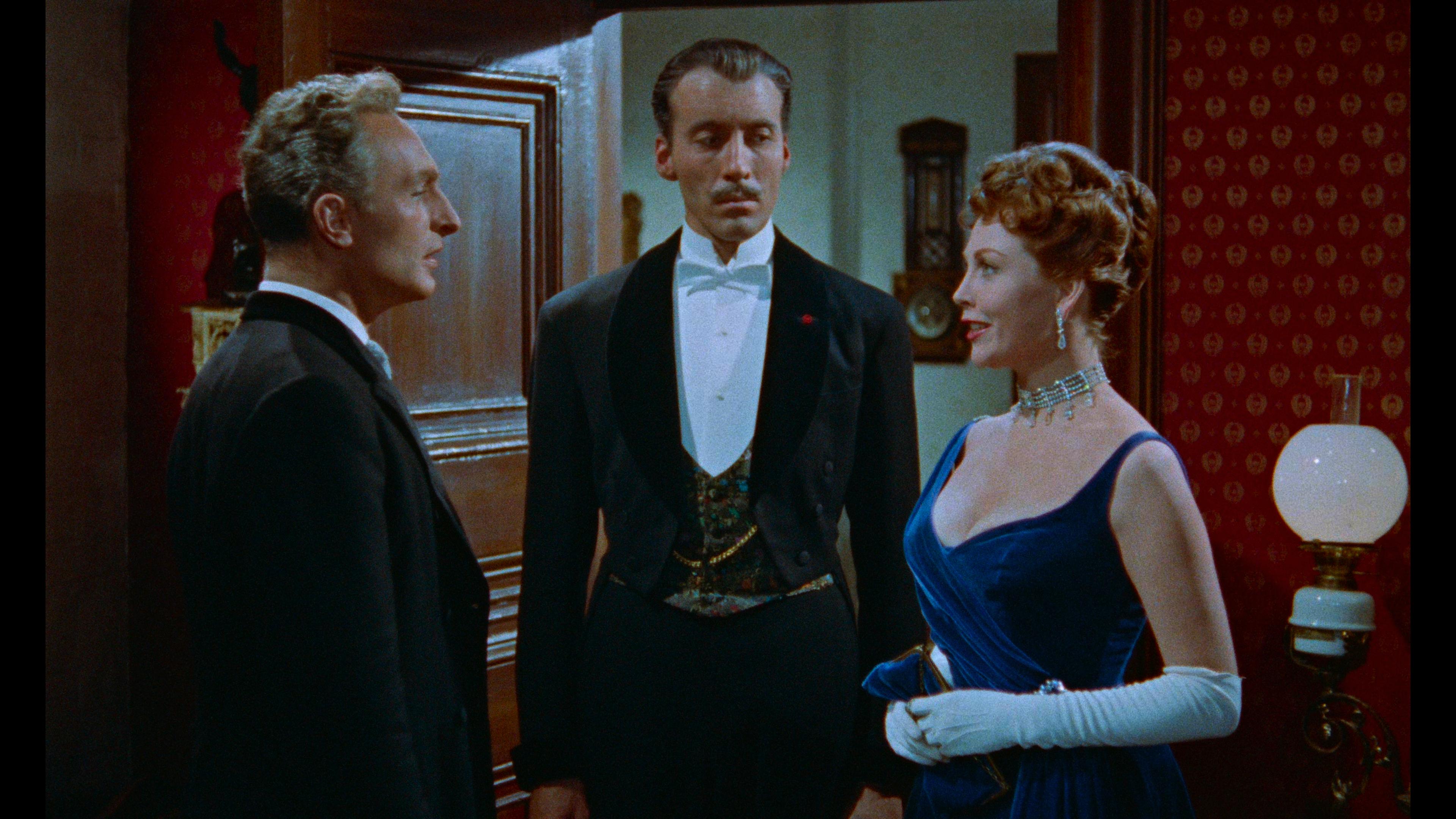
Taking another sip from the green juice, we have a DTS-HD MA 2.0 mono track to serve our creepy adventure. With my old KLSC boxed up as I try to resort my shelving, I couldn’t find that disc to compare, but going from memory and looking at my old notes, I’d swear this track on the Vinegar Syndrome edition sounds better. Dialogue exchanges have a bit more heft and clarity without sounding quite as soft. Scoring also plays a little better, with more prominence given to the bigger, scarier, dramatic beats. While most of the film plays as a one-to-one conversation between characters in isolated rooms, there are a few busy party scenes, a scene in a pub, and the big finale, which all play nicely. Certainly not the most aggressive mix, but very good and suitable for this edition.
Special Features
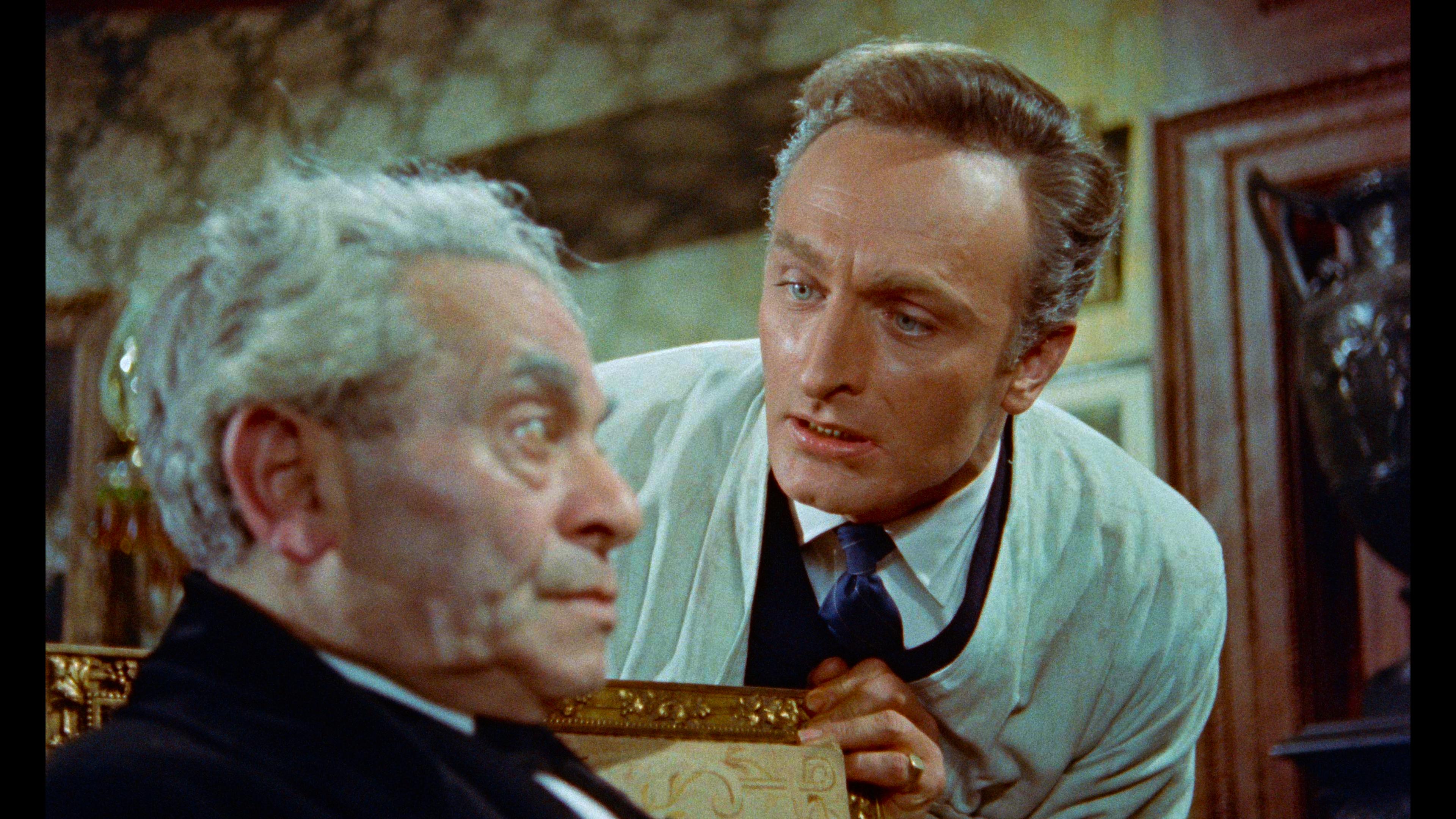
On this release, none of the KLSC disc extras return, so if you’re a fan of those materials, you’ll want to hold onto that release. Instead, Vinegar Syndrome struck out for their own assortment of extra features, including a new excellent commentary track with Kim Newman and Stephen Jones, a new and longer interview with Jonathan Rigby, as well as interviews with film historians Vic Pratt and Melanie Williams, and another with third assistant director Hugh Harlow. All in all, a fine selection of worthwhile bonus materials.
- Audio Commentary featuring Stephen Jones and Kim Newman
- A Hideous Concoction - with Jonathan Rigby (HD 26:42)
- The Man Who Could Direct Death - with Vic Pratt on Terence Fisher (HD 24:32)
- Court in Session - with Melanie Williams on Hazel Court (HD 17:08)
- The Man Who Can Chat Death - Interview with Hugh Harlow (HD 7:25)
- Alternate Censored Ending (HD 1:09)

Hammer had a long history of delivering ghastly tales of Gothic horror. Their films weren't all just new spins on Frankenstein’s monster or Dracula. Some were the sort of twisty, unnerving body horror flicks like The Man Who Could Cheat Death. With some solid, edgy performances, particularly from Anton Diffring and Christopher Lee, director Terence Fisher delivers a swiftly paced, suspenseful tale of terror. Now, thanks to Vinegar Syndrome, the film enjoys a welcome upgrade to 4K UHD with two versions in glorious Dolby Vision transfers, excellent audio, and a fine assortment of extras. A terrifically eerie feature for the Halloween season. Recommended
-
 Strange Bedfellows: Why Horror is a Natural Fit for 4K UHD & Blu-ray Physical MediaBy:
 -
 Turbine Is Back In Action for John Watts’ ‘Clown’ on 4KUHD Mediabook November 13th!By:
 -
 The Horror of 'Clown in a Cornfield' Comes Home With A 4K UHD SteelBook from RLJE Sept. 9th!By:
 -
 Turbine Sinks Their Fangs into Our Necks With NEW Renfield and Abigail 4K UHD Mediabooks!By: