Sunset Blvd. - 75th Anniversary 4K Ultra HD Blu-ray
One of the greatest movies of all time joins the 4K UHD family with a stunning, remastered Dolby Vision HDR transfer that makes it more compelling and immersive than ever before. Sunset Blvd. is a masterpiece in every sense of the word, and Paramount lavishes plenty of care on this timeless Hollywood tale. The new multi-channel audio track doesn't bring much to the party, but with visuals like this, who cares! No home video collection is ready for its close-up without this disc sitting on the shelf. Must Own.
Storyline: Our Reviewer's Take
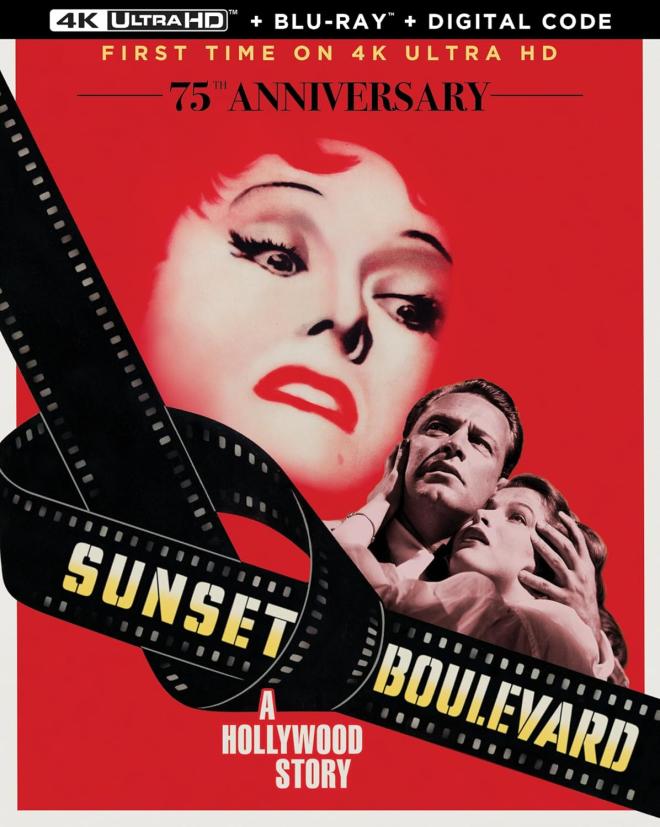
Sunset Blvd. just might be the best Hollywood film about Hollywood ever made. Director Billy Wilder fashions a cynical, searing portrait of Tinseltown that's laced with sardonic wit and a strange, morbid reverence, all of which make it utterly mesmerizing from the memorable opening (a dead body floating face down in a swanky swimming pool) to the iconic coda. Populated by a gallery of fascinating real and imagined characters and shot entirely on location in Los Angeles, Sunset Blvd. brilliantly blurs the line between fantasy and reality as it tells its noir-ish tale of a struggling screenwriter on the make, a reclusive, has-been silent star desperate for that elusive comeback, and a heartless industry that creates and destroys careers in the blink of an eye.
Only Wilder and his equally talented collaborator Charles Brackett could infuse one film with so many distinct and differing tones. Sunset Blvd. is a self-reflexive drama, black comedy, moody film noir, bizarre romance, and horror movie all rolled into one. Its script won a well-deserved Oscar, but its expert direction, pitch-perfect performances, dazzling production design, seductive black-and-white cinematography, and memorable music score make it one of the most impeccably crafted movies of not just Hollywood's Golden Age, but any age. Sunset Blvd. is very much of its time, but it's also timeless, which is why the story was recycled into a Broadway musical that continues to thrill and delight audiences to this very day. Though Andrew Lloyd Webber can't compete with Wilder and Patti Lupone, Glenn Close, and Nicole Scherzinger can't hold a candle to Gloria Swanson, the material is so strong and the themes so potent and universal, Sunset Blvd. can stand up to different, evolving interpretations.
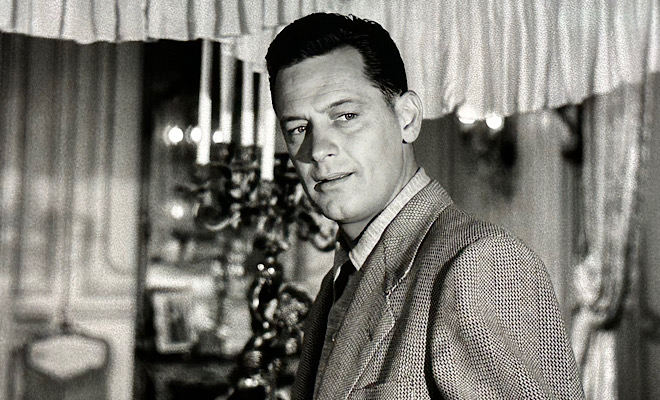
My former colleague, Steven Cohen, wrote a literate, spot-on assessment of Sunset Blvd. back in 2012 upon the movie's initial Blu-ray release, and my thoughts align completely with his. Any serious film buff will want to read his review, but before I turn it over to him, I just have a few more thoughts to add. Sadly, Sunset Blvd. marked the end of the Wilder-Brackett partnership. Reportedly, a vehement disagreement over a montage sequence so incensed Wilder he vowed never to work with Brackett (who produced their pictures as well as co-wrote them) ever again. Though Wilder would achieve equally great success and garner the same glowing kudos with his new partner, I.A.L. Diamond, I must say I prefer the Wilder-Brackett films, and the fact that Sunset Blvd. was their last makes the movie, in addition to everything else, a little bittersweet for me.
In all, Sunset Blvd. nabbed a whopping 11 Oscar nominations, including Best Picture, Director, Actor (William Holden), Actress (Gloria Swanson), Supporting Actor (Erich von Stroheim), Supporting Actress (Nancy Olson), Cinematography, and Editing. It won only three (Story and Screenplay, Music Score, Art Direction-Set Decoration), largely because it went up against another of the best movies ever made, All About Eve, which does to Broadway what Sunset Blvd. does to Hollywood. While it's just as biting, quotable, and deliciously entertaining as Sunset Blvd., All About Eve's lighter tone probably made it more palatable for Academy voters, which is why it took home the bulk of awards that year. Swanson, who won the Golden Globe and National Board of Review awards for Best Actress, should have won the Oscar, too, but she and Eve's Bette Davis likely split the aging diva vote, paving the way for Judy Holliday to pull the upset for her magnificent work in Born Yesterday.
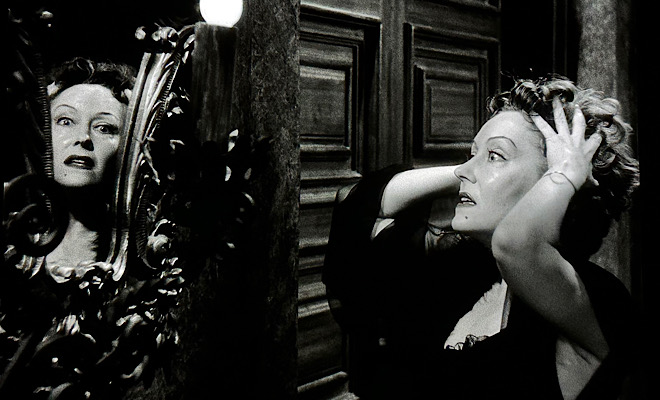
Okay, I'll shut up now and turn it over to Steven Cohen, who gave Sunset Blvd. the elegant tribute it so richly deserves...
All stars, no matter how brightly they shine, eventually flicker and fade. Some go out gracefully, while others… well, not so much. Clinging to the past through delusion, they hold tightly to burnt out glory and hastily snuffed dreams, refusing to accept the rueful fate an unjust world has thrust upon them. In Billy Wilder's cinematic masterpiece Sunset Blvd. that faded star is the tragic and terrifying Norma Desmond, and that unjust world is the glittery mass of false promises known as Hollywood. Teeming with powerful drama, striking images, absurd humor, and infinitely quotable lines, the film has left an indelible impression on the world of cinema. It's a Hollywood film noir, satire, tragedy, and horror story all wrapped into one - and while time may have dulled poor Norma Desmond's starry allure, the film itself remains a shining example of motion picture art.
After running into car trouble, a struggling screenwriter, Joe Gillis (William Holden), stumbles upon an old Hollywood mansion. There he meets former silent film star Norma Desmond (Gloria Swanson). Desperate for a return to the screen, the aging actress hires Gillis to help write a script for her to star in. While Gillis is at first quite eager to take advantage of the opportunity (and Desmond's checkbook), the situation slowly becomes more complicated. As Desmond grows increasingly obsessed and delusional, Gillis attempts to escape her grip, but is continually pulled back in, leading to potentially fatal consequences.
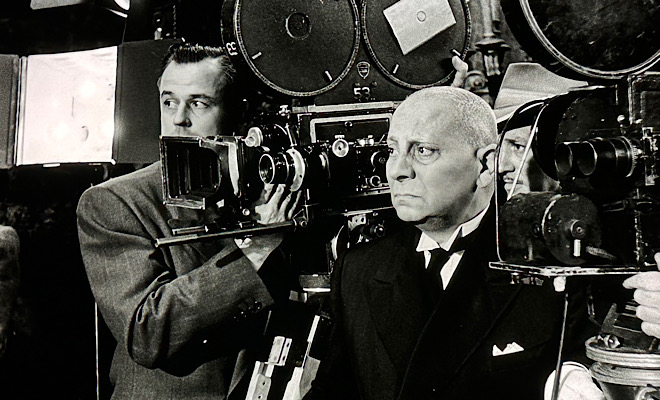
A dead body floating lifeless in a pool. It's one of cinema's most iconic opening sequences, and as joined by William Holden's sardonic, hardboiled voiceover, it perfectly sets the tone for the singular masterpiece that follows. Mostly told in flashback, Wilder and co-writer Charles Brackett's script is among the greatest ever written, and together they successfully weave a story full of suspense, pathos, and dark, biting humor. While the plot contains many elements of classic film noir, the narrative ultimately defies any one genre. Instead, the writers mix in a strong satirical edge, layering the drama and tension with a witty and occasionally scathing commentary on the pitfalls of show business.
Concepts dealing with obsession, failure, opportunism, deception, and the sorrows of fading glory are all examined with intelligence and complexity, building an engaging tale steeped in delusion and escalating madness. The dialogue stings with wit and insight, and the film is home to a plethora of famous quotes that reveal a playfully jaded voice. Like many of Wilder's famous works, the movie features a decidedly cynical viewpoint, and through Norma Desmond and Joe Gillis' tragedy, the director takes repeated jabs at the exploitative, illusory nature of Hollywood. With that said, as critical as the film's thematic underbelly can be, the movie isn't really meant to serve as a genuine attack on the studio system. In the end, this is a film about filmmaking, and it's full of numerous references, nods, and observations - both mocking and loving alike.
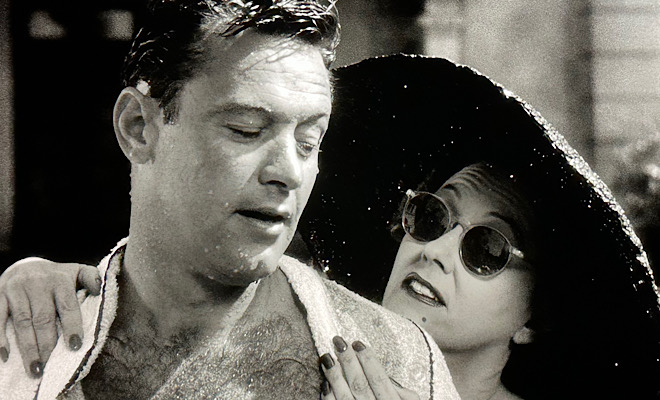
Bolstering the satire, is an almost bizarre undercurrent of dry absurdity. While the film's content is disturbing, Wilder and Brackett maintain a darkly comedic tone that somehow walks a fine line between sincere drama and overt farce. For instance, when we first meet Norma Desmond, she's awaiting an undertaker to help her bury her deceased pet monkey. When said monkey funeral does take place, it's an explicitly odd, humorous sight that still retains a certain level of eeriness and genuine emotion. The runtime is full of absurd sequences like this, but instead of exaggerating the inherent silliness of the situations, Wilder plays it mostly straight, making it nearly uncomfortable to watch. In many ways, the entire film presents a fascinating examination of the grotesque - and by grotesque I don't simply mean ugly. I mean grotesque in the literary sense, blending the strange and distorted with a palpable, sometimes devastating hint of compassion and pity. Indeed, throughout Sunset Blvd., behind every laugh, there is always a deeper tinge of sadness lurking just beneath the surface.
Joe Gillis serves as our jaded protagonist and narrator, and while his ultimate fate is essentially unveiled in the opening scene, this early reveal doesn’t really detract from the mystery -- it merely wets our appetite for more. William Holden plays the character with just the right amount of cynicism, selfishness, and legitimate kindness. In fact, while it's the characters' lesser qualities that initially get him into trouble, it's actually his better traits that end up sealing his unfortunate end. Firmly cementing the story from his perspective, Gillis' voiceover holds the film together, and serves to do much more than simply summarize the events on screen. To the contrary, the narration actually helps to maintain the movie's mixture of tones. The character's constant ironic observations are littered with biting metaphors that all work to undercut and enhance the drama. Holden delivers each humorously dense, caustic line with a perfect mixture of hardened scorn and laid back detachment. As entertaining as this narration can be, the real meat of the film lies in the character's fateful pairing with Norma Desmond. Through their unhealthy relationship, Gillis becomes a kept man, imprisoned by a mixture of his own self-serving weaknesses and compassion. Their precarious coupling drives the drama and rests at the very core of the narrative.
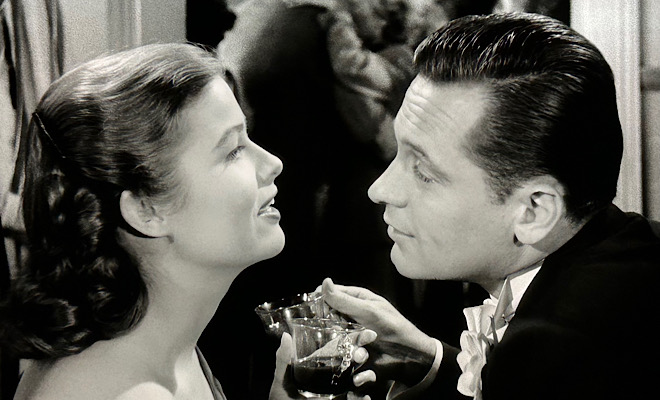
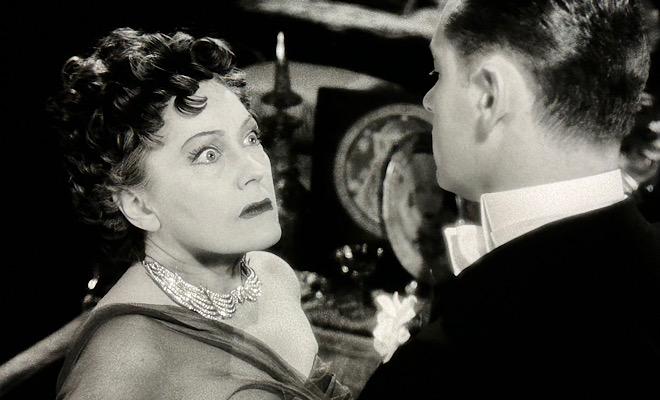
In the role of Norma Desmond, Gloria Swanson turns in one of cinema's most memorable and unsettling performances. A haughty, narcissistic former silent film star prone to delusions of grandeur and fits of melancholy, Desmond refuses to accept her has-been status. Locked away in a gothic mansion, she has grown oblivious to reality, tragically clawing onto her faded glory with a talon-like grip. Swanson's portrayal is nothing short of revelatory, and the actress crafts a truly larger-than-life character. In some ways, the role crosses the line into caricature, but this is only because the character herself has basically devolved into a misshapen impression of what she once was. This occasional excess is actually essential to Desmond's entire persona, and Swanson maintains a disturbingly raw emotional center. Though deranged and ego-maniacal, the woman ultimately remains wholly vulnerable and sympathetic. Used up and spit out by the industry, Desmond has become a tragic relic, seemingly displaced in time. Everything from her gaudy dress to the very cadence of her voice calls back to an era long since passed. Menacing, sophisticated, deranged, and heartbreakingly pathetic, she craves the spotlight, and Swanson gives form to that obsession with terrifying clarity.
Desmond's opulent Hollywood mansion serves as the setting for much of the film's story, and the location becomes a striking character unto itself. Creepy and ornate, the immense house acts as a self-indulgent shrine to the actress's past glory. Pictures of the fallen star litter the mansion's rooms, and a personal film projector only plays Desmond's former classics. The vast, mournful atmosphere is faintly gothic in nature, and Wilder and his production designer layer the space with shadowy lighting and elaborate details. Along with the absurd situations, the location presents a slight break from reality, carrying the viewer into a 'Twilight Zone-esque' universe vaguely parallel to our own.
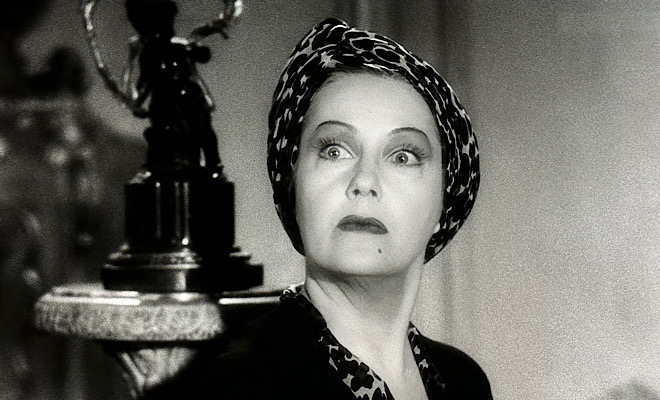
With such personality already present in the script, performances, and setting, Wilder mostly lets the heightened content speak for itself, but there are numerous key scenes where the director offers some truly powerful compositions and aesthetic choices. Film noir-influenced visuals and lighting schemes permeate the work, bathing the screen in shadowy images while slow moving tacks and zooms create a moody sense of motion and building dread. Traditional coverage is kept to a minimum, maintaining the dramatic and humorous tension of individual scenes through master shots with minimal cuts. Still, specific close-ups are used to punctuate important beats, often highlighting Desmond's increasing hysteria, emphasizing her unblinking madness. Wide shots are also employed to accentuate the immense space of the mansion, allowing characters to maneuver about the large area without cutting away.
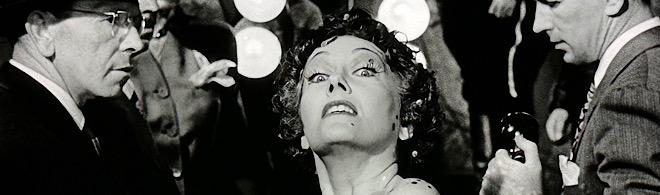
Other scenes feature an expert command of blocking, including one shot that shows Desmond on the phone in the foreground while Gillis slowly approaches from the background, intruding on her clandestine conversation and the actual shot itself. Another notable sequence features the pair watching one of the actress's old films. At one point, Desmond stands up, dramatically caught between the beam of light shooting from the projector. Smoky dust billows in the air around her, burning in tandem with the fiery intensity of her words. It’s a powerful image that perfectly sums up the character's misplaced passion, and as pointed out in the commentary, it's like something ripped straight out of a monster movie. Of course, nothing is more striking than the film's infamous finale, which, much like its opening, is home to one of cinema's most iconic, mesmerizing, and disturbing images.
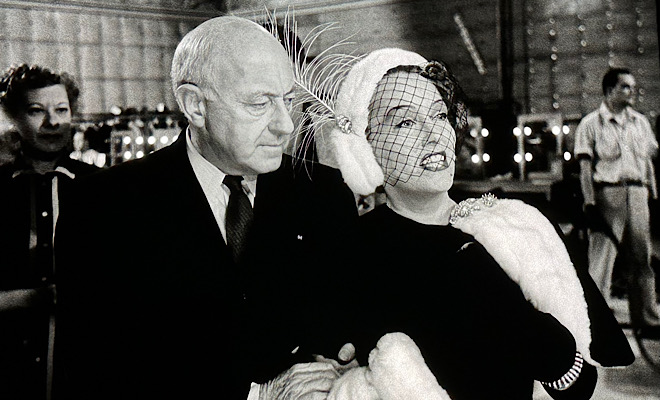
As Norma Desmond makes her immortal descent down the stairway of her ghostly abode, Billy Wilder forever cements himself as one of Hollywood's greatest directors. Part scathing satire, part film noir, Sunset Blvd. is a singular, peerless achievement. Featuring some of the best dialogue, plotting, characters, and performances to ever hit the silver screen, the movie is a classic in every sense of the word. Wilder's work is a darkly absurd rumination on grotesque tragedy, fading stars, and unending exploitation - and somehow he manages to filter it all through a script that is playfully sardonic, dramatically tense, and genuinely heartbreaking. A disturbing and darkly humorous journey into the pitch black heart of Hollywood, the film leaves a truly lasting impression. Norma Desmond is one of the medium's greatest creations, teetering between larger-than-life excess and devastating pathos. Though her final image may eternally blur out of focus, her spectral visage lives on through the storied annals of cinema, where she remains forever lost in that mournful tomb of a house, quietly listening for the soothing purr of a rolling camera.
Vital Disc Stats: The 4K Ultra HD Blu-ray
Sunset Blvd. arrives on 4K UHD packaged in a standard case. A 1080p Blu-ray disc that houses all the supplements and a leaflet that contains the code to access the Movies Anywhere digital copy are tucked inside the front cover. Video codec is 2160p/HEVC H.265 with Dolby Vision HDR and default audio is Dolby TrueHD 5.1. (A Dolby TrueHD 2.0 mono track is also included for purists seeking to recreate the original theatrical experience.) Once the disc is inserted into the player, the static menu without music immediately pops up; no previews or promos precede it.
Video Review

Norma Desmond may say "It's the pictures that got small," but this 2160p/HEVC H.265 transfer with Dolby Vision HDR from Paramount looms large when compared to other 4K UHD classics presentations. According to a Paramount press release, "this cinematic masterpiece has been meticulously restored in 4K using the highest quality surviving element - a 35mm duplicate negative - and every step of the restoration was approached with great care to faithfully honor Billy Wilder's original vision. The Library of Congress provided a 35mm print from its archive to serve as a reference for color accuracy throughout the restoration." A couple of brief blips notwithstanding, this gorgeous rendering consistently delights the eye and proves it's more than ready for all the close-ups Wilder and seven-time Oscar-nominated cinematographer John F. Seitz throw at it. (Seitz deservedly earned an Oscar nod for Sunset Blvd., and three of his other six nominations were also for Wilder movies - Five Graves to Cairo, Double Indemnity, and The Lost Weekend.)
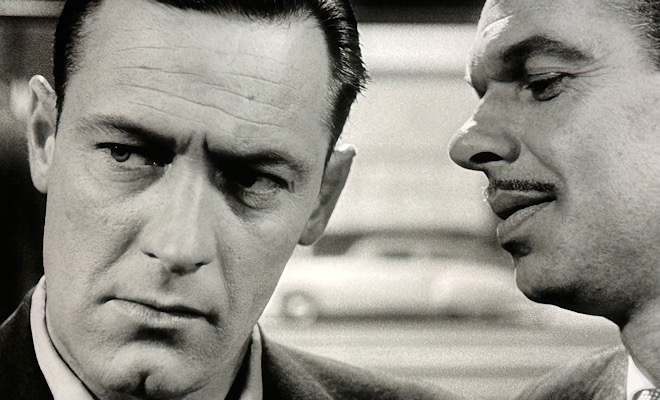
Doing your best with what you have to work with is a popular saying, and Paramount does just that, making lemonade out of this 35mm duplicate negative. Though some shots exhibit more grain, brightness, and texture than others, the bulk of the movie looks utterly spectacular. Crystal clarity, pitch-perfect contrast, and enough grain to maintain a film-like feel without drawing undue attention produce a balanced, vibrant image that brims with detail and depth as it transports us back to 1950 Hollywood. The rough pavement in the opening sequence, gleaming cars, the raised stripes in Joe's cloth bathrobe, the weave of tweed jackets, the leopard patterns of Norma's attire, wafting smoke, specks of dust in the light emanating from the projector, and all the ornate décor in Norma's mansion (Sunset Blvd. won an Oscar for Best Art Direction-Set Decoration)...all are sharply rendered. Deep blacks and crisp, stable whites anchor the picture, while wonderfully varied grays supply essential contours. Excellent shadow delineation enhances all the noir accents and an array of striking close-ups highlight Holden's chin cleft, a tiny scar on his right cheek, and Swanson's distinctive chin mole and bulging eyes almost dripping with mascara. No print damage mars the presentation and no digital anomalies could be detected. This is a stunning transfer that makes Sunset Blvd. more immersive and involving than ever before, so fans shouldn't hesitate to upgrade.
For those solely interested in the 1080p/MPEG-4 AVC Blu-ray transfer, here's Steven Cohen's 2012 review of that presentation:
The movie is provided with a black and white 1080p/AVC MPEG-4 transfer in the 1.37:1 aspect ratio. Beautifully restored, Sunset Blvd. looks absolutely marvelous on Blu-ray.
The print is in excellent condition, with virtually no signs of damage. A moderate layer of natural grain is preserved throughout the runtime, giving the image a rich, filmic appearance. Detail is good, and while certain shots maintain a deliberately diffuse glow, close-ups can be rather striking, revealing lots of fine detail in facial features, accentuating Norma Desmond's grotesque madness. Likewise, Desmond's opulent, creepy mansion is full of tiny, intricate textures, and all of the ornate details come through beautifully, highlighting the incredible sets, costumes, and production design. The movie's dramatic, film noir influenced lighting leads to a great sense of contrast, with steady whites and deep, shadowy blacks. With that said, there is some slight contrast pulsing throughout, but these instances are relatively minor and never distracting.
Authentically restored, the film looks fantastic. Clarity is strong, grain is natural, and contrast is well balanced. The movie's impeccable production design is impressive, and the cinematography is layered with detail. This is a great example of a classic film transfer done right.
Audio Review
The Paramount press release states the "new [Dolby TrueHD] 5.1 audio mix...was produced by Deluxe Audio with support from Park Road Post in New Zealand, whose proprietary technology enabled the isolation of dialogue, music, and effects tracks." Though this newly fabricated 5.1 track outputs excellent sound, it's not much of an improvement over the Dolby TrueHD 2.0 mono track that's also included on the disc. If you're hoping for rear channel activity and palpable stereo separation across the front speakers, you'll be sorely disappointed. What you get is a slightly fuller, more enveloping soundscape that benefits from superior fidelity and tonal depth. A wide dynamic scale embraces all the dramatic highs and weighty lows of Franz Waxman's wonderfully moody, Oscar-winning score, while strong bass frequencies lend an eerie sense of foreboding to a heavy-handed organ solo. Sonic accents like facial slaps, gunfire, and a tire blowout are crisp and all the delicious dialogue is well prioritized and easy to comprehend. All the incidents of crackle that plagued the 2012 Blu-ray mono track have been erased, and no other surface noise could be detected.
Here's Steven Cohen's assessment of the Dolby TrueHD 2.0 mono track from his 2012 review:
The film is provided with an English Dolby TrueHD 2.0 Mono track, along with French, Spanish, and Portuguese Dolby Digital mono tracks. Optional English SDH, Spanish, French, and Portuguese subtitles are also available. While very respectable overall, there are a few hiccups here and there.
Though the track is understandably thin, dialogue and voice over narration are clear and clean. Effects work and score carry decent fidelity and range (for a film of this age), with no major distortion. Notable background hissing and pops are also absent. Unfortunately, there are a few brief but noticeable background crackles/static in a few instances that can be slightly distracting (check out the 06:03, 43:22, and 44:13 marks for examples). These instances aren't constant, and there are long stretches without any issues, but the crackles are frequent enough to be a minor annoyance.
Sunset Blvd. comes to Blu-ray with a respectful mono track. There are some age-related issues, but for the most part this is a solid and faithful mix.
Special Features
Because the included Blu-ray disc is the same disc that was released in 2012, all the extras from that disc remain intact.
- Audio Commentary with Ed Sikov - Ed Sikov, author of Sunset Boulevard: The Life and Times of Billy Wilder, provides a decent commentary track for the film. Sikov offers a standard mixture of production trivia and analysis, tracing the film's development while sharing stories about its director and cast. Insights into the movie's characters, mixture of tones, themes, unique dialogue, locations, visuals, and plot are also provided. With that said, Sikov does spend some time merely summarizing the events of the film, and there are a few pauses in his discussion. It's not exactly essentially listening (especially since the subsequent featurettes cover a lot of the same ground), but fans might want to take a listen.
- Featurette: "Sunset Blvd.: The Beginning" (SD, 23 min) - Interviews with film historians, producers, and actress Nancy Olson (who plays Betty in the film) are provided, all tracing the movie's origins and production. Snippets from an archive interview with Gloria Swanson are also included. Information on the Wilder/Brackett collaboration is detailed, along with some anecdotes from the shoot. Casting is also discussed, and many alternate choices for the lead characters are shared.
- Featurette: "Sunset Blvd.: A Look Back" (SD, 26 min) - More interviews are provided, this time offering insights into the film's original, abandoned opening sequence. The movie's themes and critical/audience success are also touched upon. Unfortunately, along with these new bits, many interview pieces from the previous segment are simply repeated here.
- Featurette: "The Noir Side of Sunset Blvd." (SD, 14 min) - In this featurette, author and former LAPD detective Joseph Wambaugh discusses the movie's similarities to, and deviations from, film noir storytelling.
- Featurette: "Sunset Blvd. Becomes a Classic (SD, 14 min) - More repeated interview bits are offered, along with additional archive material with Gloria Swanson, insights into the film's lasting impact, and details on the Broadway musical adaptation.
- Featurette: "Two Sides of Ms. Swanson" (SD, 11 min) - Swanson's granddaughter and other participants shed light on the actress's personal and professional life.
- Featurette: "Stories of Sunset Blvd." (SD, 11 min) - Even more repeated interview snippets from earlier supplements are provided, along with a few new stories about the shoot.
- Featurette: "Mad About the Boy: A Portrait of William Holden" (SD, 11 min) - Here the focus is on actor William Holden and his filmography.
- Featurette: "Recording Sunset Blvd." (SD, 6 min) - Efforts to re-record and finally commercially release Franz Waxman's score are highlighted.
- Featurette: "The City of Sunset Blvd." (SD, 6 min) - This featurette offers some trivia about the various Hollywood locations used in the movie.
- Featurette: "Franz Waxman and the Music of Sunset Blvd." (SD, 14 min) - Franz Waxman and his score are discussed here. Details on specific themes and cues are offered along with a solid biography on the composer and his path to Hollywood.
- Morgue Prologue Script Pages (HD) - Two drafts of the film's amusing deleted opening scene are offered. The first is dated December 21, 1948, and the second is dated March 19, 1949. While the completed scene no longer exists, some filmed shots are available. In the first draft, a camera icon will occasionally appear, and if the user selects it, an accompanying video clip (1080p, no sound) will play of that portion of the script.
- Hollywood Location Map (SD) - A map of Hollywood and Paramount Studios is offered with specific locations seen in the movie. If the viewer selects a location, a brief clip plays, offering some trivia about the area and its relationship to the film. While a decent addition, a lot of this information was already covered in an earlier featurette.
- Featurette: "Behind the Gates: The Lot" (SD, 5 min) - This is a brief, fluffy account of Paramount Pictures' history.
- Featurette: "Edith Head: The Paramount Years" (SD, 14 min) - Celebrated costume designer Edith Head is highlighted here, with details on her various projects for Paramount (including Sunset Blvd.).
- Featurette: "Paramount in the '50s" (SD, 10 min) - This is a highlight reel of Paramount's filmography throughout the 1950s.
- Galleries (HD) - Three galleries labeled "Production," "The Movie," and "Publicity" are provided in 1080p, offering lots of stills and behind-the-scenes photos.
- Theatrical Trailer (HD, 3 min) - The film's trailer is presented in 1080p.
Final Thoughts

Even under the unforgiving microscope of 4K UHD, Sunset Blvd. is ready for its close-up, and boy, does it nail it. A spectacular Ultra HD presentation with Dolby Vision HDR lofts this Billy Wilder classic onto an even more rarefied plane and beautifully preserves it for generations to come. A brand new 5.1 audio track doesn't deliver anything more than suped up mono sound, but that's a minor point. This release is all about the video, and the newly minted master milks every bit of detail out of a 35mm duplicate negative while still maintaining the integrity of the original print. The 2012 Blu-ray is included in the package, so you can upgrade without sacrificing any of the extras. This movie is a cinephile's dream and Paramount treats it like the crown jewel it most certainly is. Must Own.
-
 Turbine Gasses Up For Texas Chainsaw Massacre 4K UHD Mediabook Legendary BundleBy:
 -
 Strange Bedfellows: Why Horror is a Natural Fit for 4K UHD & Blu-ray Physical MediaBy:
 -
 Turbine Is Back In Action for John Watts’ ‘Clown’ on 4KUHD Mediabook November 13th!By:
 -
 The Horror of 'Clown in a Cornfield' Comes Home With A 4K UHD SteelBook from RLJE Sept. 9th!By: