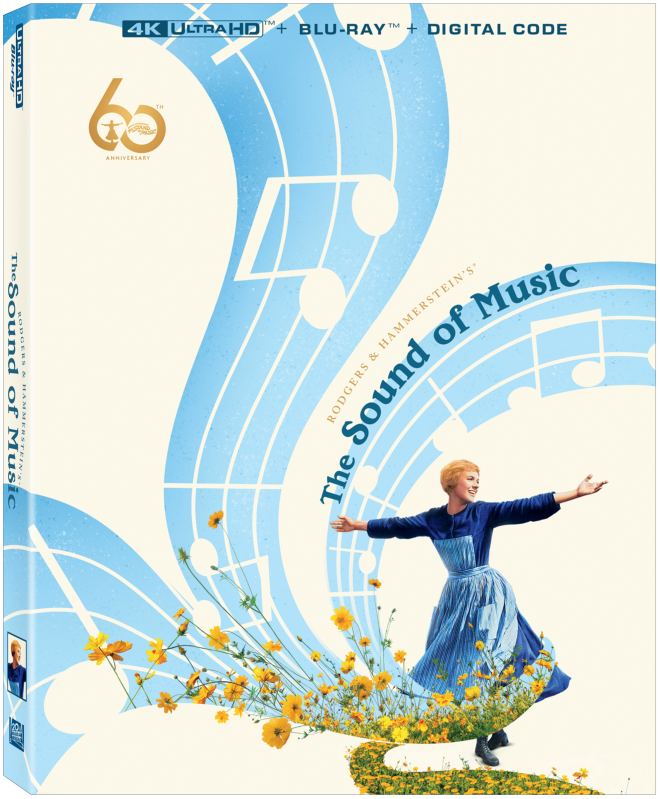
The Sound of Music: 60th Anniversary - 4K Ultra HD Blu-ray
So long, Blu-ray. Farewell. Auf Wiedersehen. Goodbye. The Sound of Music in 4K UHD is - in a word - wunderbar, thanks to a dazzling Dolby Vision HDR transfer that renders all previous editions of this Oscar-winning classic obsolete. The upgraded Dolby Atmos audio makes the music come alive like never before and Disney imports all the extras from its 2010 and 2015 releases. The Sound of Music is an essential title and this is the definitive home video edition. Must Own.
Storyline: Our Reviewer's Take
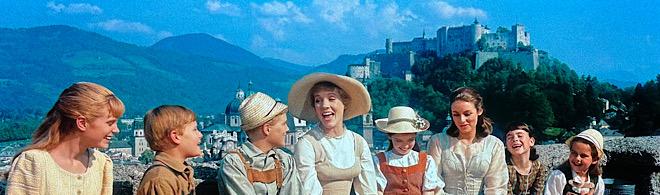
It's one of the most successful and beloved films in Hollywood history, and yet The Sound of Music continually gets a bad rap. "Too saccharine," chant the naysayers. "Too cutesy, too schmaltzy. Too many precocious singing children mugging and jockeying for camera position. Too many chipper and cheery songs. Too many nuns. Too much pious inspiration. And then there's that too-good-to-be-true nanny routine of Julie Andrews. Shouldn't we all just take a spoonful of sugar and rename this picture Mary Poppins Goes to Austria?"
Okay, take a deep breath. Take a step back. Close your eyes and open them again, and take a fresh look at The Sound of Music without all of the baggage and hearsay that's beaten down this monumentally popular and beautifully crafted movie over the past few decades. Because if you approach director Robert Wise's adaptation of the Rodgers and Hammerstein stage hit with an open mind and unspoiled heart, it's impossible not to be seduced by its considerable charms and admit (however grudgingly) that The Sound of Music is a fantastic film that justly deserved its Best Picture Academy Award and continues to dazzle and entertain a full 60 years after our first introduction to the vociferous Von Trapps. And with a brand spanking new 4K UHD transfer gussied up with Dolby Vision HDR, it is truly wunderbar!
One of the first mega-blockbusters of modern cinema, The Sound of Music enjoyed an initial and unheard-of run of almost four years. That outdistances Titanic, Avatar, and anything Marvel has cooked up by a long shot, and it's easy to see why. The themes of family, perseverance, defiance, maturation, and good old-fashioned patriotism that swirl about The Sound of Music are far-reaching and universal, and audiences of all ages can respond and relate to them. The Salzburg locations with the breathtaking alpine backdrops thrill the senses, and the score – the final effort of arguably the most lauded and influential composer and lyricist in the history of musical theater – contains scads of instantly recognizable and beautifully structured songs.
Based on the life of Maria von Trapp (Andrews), a free-spirited nun-in-training who becomes governess to the seven recalcitrant children of the gruff Baron von Trapp (Christopher Plummer) on the eve of the Anschluss (the Nazi annexation of Austria) in 1938, The Sound of Music tells a simple story laced with some predictable dramatic embellishment, but it’s the exuberant presentation and top-flight performances that elevate it to classic status. Watching Maria tame and emotionally seduce both the children and the baron, with whom she (of course) falls in love, and witnessing the family's musical development normally would never sustain interest over the course of three hours, but the talented Wise (who also helmed West Side Story) treats the tale as an epic, and his inspired use of location (a critical element the stage show lacked) and active staging of songs propel the movie forward so we're blissfully unconscious of its length. In many musicals, the numbers often disrupt the story's flow, but Rodgers and Hammerstein always made sure their songs advanced the plot, deepened relationships, and shaded characters, and Wise honors their methodology, alternating intimacy with grand-scale treatments.
Andrews may have won a controversial Best Actress Oscar for her film debut in Mary Poppins, but her signature role remains Maria, and she and The Sound of Music will be inexorably linked for all eternity. And why not? From the moment she raises her arms and trills "The hills are alive…" moments after the film begins, she captivates her audience, and her pure, almost angelic tones, boundless energy and warmth, and fresh-faced beauty engender immediate admiration. Andrews personifies the naïve, insecure, inexperienced novice who attacks her Herculean task with equal parts spunk and tenderness, and her readings of such immortal Rodgers and Hammerstein tunes as "My Favorite Things," "Do Re Mi," and the title song remain definitive. And if you still feel the need to carp that she's too virginal or prim, just watch the achingly romantic "Something Good" (which was a new song written expressly for the movie) and you might just change your mind. Dame Julie definitely has a sexy side, and in that gazebo scene with Plummer, she makes all of us fall in love with her.
Andrews, though, is not the whole show. Plummer may have initially regarded his role with thinly veiled disdain, but he's quite good, as are Eleanor Parker as the stuffy baroness who vies for his attentions and Peggy Wood as the patient and inspirational Mother Superior. Though dubbed, her rendition of "Climb Ev'ry Mountain" is still quite moving. The city of Salzburg and the Austrian Alps are also major characters and many times come close to stealing the picture, so mesmerizing is their picturesque charm.
And then there's the remainder of the score that includes such identifiable and hummable tunes as "Maria," "Sixteen Going on Seventeen," "Edelweiss," "The Lonely Goatherd," and "So Long, Farewell." Coupled with the romantic story and abundance of glorious scenery, The Sound of Music becomes one of the most captivating, family-friendly musicals ever to grace the screen, a film that merits its big canvas and fills it to perfection, especially in 4K UHD. Sure, it's a little saccharine. Without a doubt, it's a tad schmaltzy. But every now and then that's just what the doctor orders, and this true-blue classic never fails to inject us with a healthy, rejuvenating dose of honest emotion, wonderful music, and impeccable artistry.
Vital Disc Stats: The 4K Ultra HD Blu-ray
Packaged in a standard case and protected by a sleeve, the 4K UHD 60th Anniversary Edition of The Sound of Music contains three discs. The first houses the feature film with a 2160p/HEVC H.265 transfer with Dolby Vision HDR, along with two audio commentaries and a sing-along option. The second disc is a 1080p Blu-ray that contains the movie, the two audio commentaries, and the sing-along option, and the third is another Blu-ray that's stuffed to the gills with hours upon hours of documentaries, featurettes, vintage rarities, galleries, and trailers. Three glossy collectible postcards are tucked inside the case's front cover, and though the packaging advertises a digital code, the copy I received did not contain one. Audio for the 4K UHD disc is Dolby Atmos; for the 1080p Blu-ray it's DTS-HD Master Audio 7.1. Both discs also include a 2.0 Dolby Digital Descriptive Audio track. Once the discs are inserted into the player, the static menus with music immediately pop up; no previews or promos precede them.
Video Review
Not a lot specific information has been released about this 2160p/HEVC H.265 transfer with Dolby Vision HDR, but this latest restoration truly makes The Sound of Music look more vibrant, colorful, and clear than ever before. According to a press release, "The Walt Disney Film Restoration team worked for nine months to digitally enhance the film, cleaning up dirt, warping, and film grain issues to deliver the film with both enhanced visual and audio." Another press release emphasized the care that went into the restoration more poetically, saying the team combined "artistic skills with innovative technology in a process more delicate than the petals of an edelweiss." Okay, that's a bit much to say the least, but you get the idea. The restoration team went all in on The Sound of Music and the fantastic results reflect their level of commitment and skill.
Whether a brand new master was created for this release remains unclear, but whatever source was used has been refined to perfection. If, like me, you worried a little when the press release mentioned addressing film grain issues, don't despair. The Sound of Music still looks incredibly film-like and faint grain is almost always visible. The transfer faithfully honors Ted D. McCord's Oscar-nominated cinematography, and the exceptional level of detail allows us to fully absorb all the textures, patterns, fabrics, and décor that earned the film Oscar nods for Art Direction-Set Decoration and Costume Design. Clarity and contrast are pitch-perfect, the image flaunts palpable depth, shadow delineation is superb, and silhouettes are sleek and marvelously distinct.
Colors are bold and vivid, but still exude a natural look. Reds especially pop, but the verdant green landscapes deep blue skies, and Liesl's pale blue eyes also grab attention. The nuns' black robes are inky and their white accents are bright and crisp, and razor-sharp close-ups highlight facial pores and blemishes, crow's feet, facial hair, and Andrews' flawless complexion. Not a single mark, speck of dirt, or errant scratch mar the pristine source and no digital anomalies could be detected. Though previous home video transfers have been lovely, this 4K UHD rendering tops them all and absolutely demands an upgrade if you're a Sound of Music fan.
I don't own the 2015 Blu-ray, but the 1080p transfer included in this 60th anniversary release is definitely a big step up from the 2010 45th anniversary Blu-ray edition. The image here is more vibrant, details are better defined, colors are lusher, and grain has been reduced in a couple of key scenes. All in all, it's just a more pleasing transfer, so if you're still wedded to 1080p, an upgrade is also recommended.
Audio Review
The hills are alive with the sound of Atmos! And what a glorious sound it is! It's hard to believe a 60-year-old movie can produce more impressive Atmos audio than recent releases, but there you have it. Though The Sound of Music doesn't contain any aerial audio effects or very much distinct channel separation, this Atmos track maximizes what's there and shows it off to its best possible advantage. The music, of course, is the greatest beneficiary, and as soon as the orchestra swells during the opening minutes and Andrews performs her iconic twirl, the flood of sound emanating from the ceiling will thrill any classics aficionado who heretofore could only dream of experiencing such multi-channel bliss while watching a film of this vintage. The immersive nature of this track is truly astounding, and at last the audio matches the scope and grandeur of the visuals.
The Sound of Music won Oscars for Best Sound and Best Music (Scoring of Music, Adaptation or Treatment) and this track shows us why. Exceptional fidelity, tonal depth, and dynamic range embrace every note of the score and every instrument performing it...and that includes Andrews' multi-octave soprano that scales heights as lofty as the Alps at the conclusion of "Do Re Mi." Andrews' mellifluous tones have never sounded so warm and rounded and Wood's dubbed vocal on "Climb Ev'ry Mountain" exhibits a purity that makes the inspirational song even more stirring. Atmos shines again during "Edelweiss" when the festival audience raises their voices along with Georg, resulting in an enveloping eruption of fervor and emotion.
Sonic accents like Captain von Trapp's annoying, ear-splitting whistle, the church bells heralding the wedding of Maria and Georg, and thunderclaps that scare the children before Maria soothes them with "My Favorite Things" are wonderfully crisp, while the subwoofer provides some potent rumbles and beautifully augments the bass and percussion elements of the score. Subtleties like faint footsteps in the chapel and chirping birds nicely shade the action, but it's the crickets who truly steal the show. They sound so lifelike and so completely flood the soundscape I actually looked around the room, believing the sound was coming from an open window in my house rather than the speakers in my home theater. All the dialogue and song lyrics are well prioritized and easy to comprehend and no distortion or surface noise are present. If you have Atmos capability, this sensational track gives you one more reason to upgrade.
Special Features
The amount of supplemental material is truly astounding, and though there are no new supplements exclusive to this 60th anniversary edition, almost all the previously released elements from the 2010 and 2015 Blu-rays have been ported over. The only extras that didn't make the cut are the Interactive option that included a trivia track, location quiz, and behind-the-scenes photos (although the sing-along option with pop-up on-screen lyrics remains), the Music Machine option that provided instant access to all the musical numbers, and the separate soundtrack CD.
Both of the audio commentaries can be accessed on both the 4K UHD and 1080p Blu-ray discs. All the other special features reside on a separate Blu-ray disc.
Discs One and Two
- Audio Commentary by Julie Andrews, Christopher Plummer, Charmian Carr, Dee Dee Wood, and Johannes von Trapp – This group chat is "hosted" by Julie Andrews, whose mellifluous speaking voice nearly matches her beautiful singing voice. Andrews anchors this track with lots of pleasant, interesting memories and also introduces the other participants, who recorded their remarks separately – Christopher Plummer, Charmian Carr (who plays Liesl), choreographer Dee Dee Wood, and Johannes von Trapp, the youngest child of Maria and Baron von Trapp and the only sibling born in America. Andrews recalls the inclement Austrian weather, her difficulty with the "I Have Confidence in Me" lyrics, and shares several entertaining anecdotes; Carr details the injury that befell her during the shooting of "Sixteen Going on Seventeen" and delights in Plummer's off-set jocularity; von Trapp chimes in with information about his family and how their lives and personalities differed from what is depicted on screen; and Plummer salutes his other female co-star, Eleanor Parker, who portrays the Baroness. Much of the information is also shared in the comprehensive documentaries and featurettes on Disc Three (see below), but there's enough fresh material here to keep the track absorbing, despite many lengthy gaps.
- Audio Commentary by director Robert Wise - The second commentary is a solo effort by director Robert Wise, whose sporadic remarks are consistently bookended by long stretches of isolated stereo music from the film's score and scene-specific sound effects. No dialogue or song vocals are heard, and the scoring doesn't always mirror what's being presented on screen, especially where musical numbers are concerned. It's a dry, often tedious track, as Wise doesn't go far enough in depth or share enough anecdotes to sufficiently maintain interest. He talks about the nuts and bolts of shooting, the locations, the weather, casting, and the differences between the stage play and film, as well as factual liberties screenwriter Ernest Lehman took with the lives of the Von Trapp family for dramatic and narrative purposes. While it's wonderful to have Wise document his experiences and hear his insights, he loses steam as the movie progresses and the resulting gaps – filled with repetitive themes – drag out the track. If you only have the time or patience for a single commentary, I'd choose the one featuring Andrews.
- Sing Along with the Movie - This option activates pop-up lyrics for all the songs, so you can raise your voice with Maria and the von Trapp kids.
Disc Three
The bulk of the supplements reside on this disc, which includes all the extras from both the 2010 and 2015 Blu-ray editions.
- Musical Stages (HD, 84 minutes) - This section is divided into three subsections: The Songs, The Show, and The Family. The Songs section includes 12 short featurettes about each individual song that appears in the film...and three songs from the original stage show that don't. The Show section chronicles the evolution of The Sound of Music from stage to screen in six brief featurettes, one of which delineates the differences between the Broadway show and Hollywood adaptation. Four featurettes comprise The Family section, which focuses on the von Trapps and their lives after the movie ends.
- A City of Song (HD, 34 minutes) - This collection of 18 short featurettes focuses on all the individual Austrian locations where the movie was shot. It also includes a brief piece on Panorama Tours, a Salzburg outfit that sponsors wildly popular, tailor-made Sound of Music bus tours that stop at all the movie's iconic landmarks.
- Vintage Programs – This section is divided into three sub-sections: The Sound of Music, Rodgers & Hammerstein, and Audio Interviews. The Sound of Music area begins with "The Sound of Music: From Fact to Phenomenon," an 87-minute 1994 documentary narrated by actress Claire Bloom and featuring a number of cast members (including Andrews and Plummer) and creative personnel offering their memories and perspective on the making of this classic film. The documentary chronicles Maria von Trapp's journey from novice to baroness and beyond; the film successes of Rodgers and Hammerstein; the initial stages of pre-production; casting (including the reservations of both Andrews and Plummer over participating); the shooting schedule; the dubbing of Plummer and Peggy Wood; the movie's "soft" opening and eventual rise to blockbuster status (again, its initial run lasted four years!); and its lasting appeal. This is a fascinating, highly informative and entertaining documentary that includes lots of anecdotes and marvelous reflections. It's also essential viewing for even the most casual fans of this iconic picture. "My Favorite Things: Julie Andrews Remembers" is another absorbing documentary that also includes reminiscences from Plummer, Wise, and others. Andrews talks about her role, meeting the real Maria, her first audition for Rodgers and Hammerstein early in her career, her respect for Plummer, and her relationship with all the children. This 63-minute tribute from 2005 also includes a number of other tidbits and anecdotes that enhance the film and our enjoyment of it. Also from 2005, "Julie Andrews and Christopher Plummer: A Reminiscence" is a relaxed, casual tête-à-tête between the two co-stars filled with lots of good humor and laughter. The two recall experiences on and off the set, the locations, their fears over the schmaltzy aspects of the story, their fits of laughter during the filming of "Something Good," and their fellow actors, but it's the warm rapport between them that makes this piece so appealing. There's also a lovely rapport between all the grown-up actors who played the Von Trapp children in the 34-minute "From Liesl to Gretl: A 40th Anniversary Reunion." All seven actors get together for an informal chat in a living room setting and they seem like a genuine family sitting around telling stories, giggling, ribbing each other, and recalling various flubs that remain in the film. A vintage short, "Salzburg Sight and Sound," runs 13 minutes and follows Charmian Carr, who played Liesl, as she explores the Austrian town where The Sound of Music was photographed. In addition to touring some of Salzburg's beautiful landmarks, Carr meets with her vocal coach, takes her turn in the makeup chair, and lunches in the town square. "On Location with The Sound of Music" is a 23-minute travelogue and history lesson from 2005 that celebrates every aspect of Salzburg and the settings employed in the movie. Carr is once again on hand to lead the tour, and her boundless enthusiasm buoys this slightly cheesy piece. And talk about cheesy, "When You Know the Notes to Sing: A Sing-along Phenomenon" (13 minutes) looks at one of the many Sound of Music sing-alongs that take place across the country. This one transpires at The Hollywood Bowl and features audience members in full Von Trapp regalia. The Rodgers & Hammerstein section kicks off with the clip-filled tribute, "Rodgers and Hammerstein: The Sound of Their Music," an 83-minute 1985 documentary hosted by the first lady of American musical theater, Mary Martin. Excerpts from all the film versions of R&H musicals are included, from Oklahoma! to The Sound of Music, along with first-hand reminiscences from such participants and creative influences as Gordon MacRae, Shirley Jones, Celeste Holm, Yul Brynner, and choreographer Agnes de Mille. Archival interviews with Rodgers and Hammerstein add an intimate touch to this celebration, and a highlight is Martin's chat with director Joshua Logan about the ins and outs of South Pacific. Next up is the equally absorbing 1996 documentary, "Rodgers & Hammerstein: The Sound of Movies," which examines all the film adaptations of R&H stage hits, as well as the two versions of State Fair, the only R&H musical written expressly for the screen. Shirley Jones, star of Oklahoma! and Carousel, hosts this 97-minte clipfest, with assists from Rita Moreno, Nancy Kwan, and Charmian Carr, who examine The King and I, Flower Drum Song, and The Sound of Music, respectively. Though there's some overlap between the two documentaries, both are informative, well-produced, and entertaining. The Audio Interviews section includes "direct from Salzburg" conversations with Andrews, Plummer, and Peggy Wood. Andrews talks about the rainy Austrian weather, the differences between the stage and screen versions of The Sound of Music, working with children, and the new experience of making movies, while Plummer touches upon the allure of Salzburg, his transition from Broadway to Hollywood, the sparks between himself and Andrews, and the impact of location shooting. Wood, best known for playing the lead in the I Remember Mama TV series in the 1950s, provides a lively interview and reveals she was offered the same role in the original Broadway production, but turned it down. There's also a 1973 reissue interview with Andrews and Wise (by the same interviewer), in which Andrews shares insights about her casting, role, and the Austrian location. "A Telegram from Daniel Truhitte" allows the man who played Rolf to chronicle his audition, and "Ernest Lehman: Master Storyteller" provides a biographical sketch of the writer, along with extended audio outtakes from the "Sound of Music: From Fact to Phenomenon" documentary in which Lehman discusses his experiences on the film.
- Rare Treasures – This section opens with "Julie and Carol at Carnegie Hall: The Pratt Family Singers," a seven-minute clip from a 1962 TV special starring Andrews and Carol Burnett, in which the two performers spoof the Von Trapps and the Sound of Music phenomenon. (A cute idea, but not nearly as funny as I expected.) Next up is a 16-minute excerpt from the 1973 TV series The Julie Andrews Hour featuring Andrews and special guest Maria von Trapp. A one-on-one talk-show-type chat between the two is preceded by a yodeling duet and some clever scripted banter. The charming baroness makes a marvelous raconteur, regaling the audience with her struggles to learn English and her experiences after her escape from Austria. A touching duet of "Edelweiss" ends this rare reunion. Screen Tests is largely comprised of a 1999 AMC TV special that features tests of many of the children, including those who didn't get the part, as well as candidates for Baron von Trapp. Interviews with Wise, Andrews, and Angela Cartwright flesh out the piece. There are also separate screen tests of Mia Farrow (who sings a snippet of "Sixteen Going on Seventeen") and legendary voice double Marni Nixon, who appears on screen in The Sound of Music as Sister Sophia, one of the nuns. 40th Anniversary DVD Introduction by Julie Andrews runs two minutes and allows the star the opportunity to praise the film and its impact on audiences. Rarely does Andrews seem affected, but here she goes slightly over the top, and her stilted line readings sound artificial. Three Galleries provide a wealth of still images from pre-production, production, and post-production. "What Will My Future Be?" offers up about 70 storyboard drawings, wardrobe sketches, and rehearsal and pre-recording shots in both color and black-and-white. "Facing Adventure" displays more than 120 pictures from both the Salzburg locations and the Hollywood soundstages. Scene stills, on-set candids, and publicity portraits comprise the bulk of this color and black-and-white collection. Finally, "A Grand and Glorious Party" features a wealth of promotional stills, poster and advertising art, and complete pressbooks from both the original 1965 premiere and the 1973 re-release.
- Publicity – This brief section begins with three minutes of silent black-and-white footage from the 1965 Academy Awards, recorded by Fox Movietone News. A collection of seven teasers and trailers follows, beginning with a 1964 teaser and carrying on through the film's initial release and subsequent reissues. The 22-minute collection ends with a sappy, "average Joe" testimonial trailer for its videocassette home video release. Lastly, two TV Spots, totaling about 90 seconds, herald the 1973 re-release, and four Radio Spots (running a total of three minutes) advertise various reserve seat engagements for the film's original and 1973 engagements.
- "The Sound of a City: Julie Andrews Returns to Salzburg" (HD, 50 minutes) - Recycled from the 2015 50th anniversary release, this piece brings Andrews back to the Salzburg area, where she visits various filming locations, interviews some of the Austrian caretakers of the locations, and shares personal memories of her experiences making the film.
The Sound of Music in 4K UHD is not just "something good," it's something spectacular! The crystalline clarity and enhanced color spectrum of the Dolby Vision HDR picture show off the breaktaking Austrian locations to perfection and the Dolby Atmos soundtrack immerses us in the glorious Rodgers and Hammerstein score. All the extras from the 2010 and 2015 anniversary editions are also included on a separate Blu-ray disc. Though the swag is limited to three commemorative postcards, this edition is still quite special and demands an upgrade even from the most casual Sound of Music fan. Must Own.
-
 Turbine Gasses Up For Texas Chainsaw Massacre 4K UHD Mediabook Legendary BundleBy:
 -
 Strange Bedfellows: Why Horror is a Natural Fit for 4K UHD & Blu-ray Physical MediaBy:
 -
 Turbine Is Back In Action for John Watts’ ‘Clown’ on 4KUHD Mediabook November 13th!By:
 -
 The Horror of 'Clown in a Cornfield' Comes Home With A 4K UHD SteelBook from RLJE Sept. 9th!By: