In the Heat of the Night - The Criterion Collection 4K Ultra HD Blu-ray
4K UHD Review By: Matthew Hartman
Making a second killing on 4K Ultra HD Blu-ray, Norman Jewison’s In the Heat of the Night arrives from the Criterion Collection. A Best Picture-winning masterclass in character-driven suspense and mystery filmmaking, it’s an essential piece of any film fan’s home video collection. Criterion offers essentially the same 2160p SDR transfer, two audio options, and a variety of excellent extras. Highly Recommended - if you don't have it already.
Storyline: Our Reviewer's Take

If there’s one person to rival me on the HDD staff as a fan of In the Heat of the Night, it’d be our Classics Guru Mr. Krauss. After he delivered three amazing reviews of the film, twice on Blu-ray and again on the Kino Lorber Studio Classics 4K disc, I’m the one who gets to check out Criterion’s new 4K UHD release and I have a tough act to follow. As I set out to write my own feelings for one of my all-time favorite films, I found I didn't have much to add that David didn’t already write better and with more eloquence.
For my part, I will say this is an area where I like the movie more than the book. John Ball was a fine writer and the book is quite good on its own terms, all of the Tibbs books are worth the read, but this is a case where I feel the movie is a notable improvement. Stirling Silliphant’s screenplay grabbed what worked in Ball’s novel, and took it in a direction that would resonate better on film given the social-political climate of the era (and arguably even today). In the novel, the victim is a conductor of an upcoming music festival and not a northerner businessman investing in the city with a new factory. Already, that kind of shift changes the undercurrent of the story. Many events and pieces of the novel play out virtually the same, but others have been rejiggered to fit the adaptation. The movie strips away some redundant characters and changes others, but the core remains. The book is a great read, you’ll breeze right through it given the chance, but the film is what sticks the landing.

Here’s what Mr. Krauss had to say for his review of the 4K UHD from Kino Lorber Studio Classics:
"They call me Mister Tibbs!" stands as one of cinema's most memorable and passionately delivered lines. Yet the power of that immortal retort stems not just from a disrespected character's indignation over racial bigotry. Back in 1967, the words also struck a raw nerve in people all across the country and reflected the ever-strengthening winds of social change. Blacks rarely confronted Southern whites, but the Civil Rights Movement began breaking down barriers, and In the Heat of the Night, a searing indictment of prejudice disguised as a murder mystery, sought to prove achieving common ground was possible and racial harmony might not be such a far-fetched idea after all. Norman Jewison's Oscar-winning film signaled an evolution in U.S. race relations, as blacks began to forcefully assert themselves and stand up to domineering whites who diminished their worth and stole their dignity.
When I reviewed the first Blu-ray edition of In the Heat of the Night five years ago, I waxed poetic about how far we had come as a nation since 1967 and how that progress “significantly diminished” the visceral impact of In the Heat of the Night. Well, sitting here in early 2019, I’m not so sure those words are still true, or if they were ever true at all. Recent events and changing tides have sadly inflamed racial rhetoric and broadened divides, and as a result, Jewison’s film is arguably as relevant and powerful today as it was a half-century ago.
In a way, I wish it wasn’t. I wish I could categorize In the Heat of the Night as an antiquated period piece or a devastating reminder of a shameful period in our social history. Of course, we’ve come a long way since 1967, but we’ve never quite come far enough. As I wrote in 2014, “this engrossing, meticulously constructed production still strikes a chord because race remains a hot-button issue.” Well, that button is only getting hotter these days.
Perhaps because of its topicality - or maybe in spite of it - In the Heat of the Night won the Academy Award for Best Picture in 1967. Racial tensions ran so high during that turbulent period, the movie's star, Sidney Poitier, probably the most renowned African-American in the U.S. after Martin Luther King Jr., refused to shoot the picture on location in Mississippi, for no other reason than it was too dangerous. (Illinois was used instead, although Poitier did reluctantly agree to shoot briefly in Tennessee, so a critical cotton-picking scene could be authentically filmed. Reportedly, he slept with a pistol under his pillow.) Almost from the get-go, Stirling Silliphant's Oscar-winning screenplay depicts that uneasy atmosphere in the fictional community of Sparta, Mississippi, where blacks are under relentless suspicion and dutifully live as marginalized, invisible second-class citizens who fear their white superiors will unfairly target and bully them.
Virgil Tibbs (Poitier) knows this world well. Though he's a proud, successful, intelligent, and self-assured man, he's aware of the rules and keeps his head down. But after a local businessman is found dead in the street, an overzealous police officer (Warren Oates) discovers Tibbs patiently waiting for a train at the local depot, and, without any evidence other than the color of his skin, accuses him of the crime. When he's brought before the new town sheriff, Bill Gillespie (Rod Steiger), a blustery, gum-chewing bigot who runs his force with an iron hand, Tibbs reveals to everyone's surprise that he's a northerner and - get this - a Philadelphia police detective who was just innocently changing trains at the Sparta station.
After his identity is confirmed, Tibbs, who's also conveniently a homicide expert, is commanded by his Pennsylvania bosses to remain in Sparta and assist in solving the whodunit, much to Gillespie's chagrin. Working with a loud-mouthed, hot-headed, and unapologetically bigoted police chief is distasteful to Tibbs, and Gillespie can barely stomach taking directives from a black "boy" whom he knows is smarter, more polished, and more skilled than he. Yet this odd couple forms a tenuous partnership fraught with periodic head-butting, and as they become more intimately involved, each earns the other's grudging respect.
Though the murder mystery plot (which I found too preciously constructed and mechanically executed) drives In the Heat of the Night, its success hinges on the incendiary chemistry between Poitier and Steiger. The two actors often spar like heavyweight fighters, circling each other in the ring, then pouncing when one lets down his guard. They make quite a pair, but surprisingly their finest scene together isn't the classic “Mr. Tibbs” exchange, but rather an intimate, low-key discussion about loneliness, family, and dedication to a thankless job. Steiger won a Best Actor Oscar for his riveting, no-holds-barred portrayal, yet while he's always fun to watch, too often bombastic histrionics overshadow his performance. Poitier is more restrained, though at times it seems as if the mantle of "America's foremost black actor" weighs him down and lends his work a slight affectation.
Aside from the "Mister Tibbs" line, Poitier's most memorable and influential moment occurs when he's summarily slapped by an uppity white business magnate during a casual interrogation. Without missing a beat, Tibbs retaliates in kind, striking the man across the face with double the force and sending a message not just to the character, but also to the audience at large that African-Americans aren't going to be pushed around, condescended to, or abused by whites or anyone else anymore. Black Power may not have been born at that particular instant, but TIbbs’ knee-jerk reaction made a bold statement that resonated among an oppressed race that clamored for equality.
In the Heat of the Night surely won the Best Picture Oscar because of its powerful message and forceful presentation. Movies like The Graduate and Bonnie and Clyde may exude more artistry, but their themes pale in comparison. For once, substance trumped style, and because this fine film refused to pull any punches in 1967, it's still able to pummel audiences today.
Vital Disc Stats: The 4K Ultra HD Blu-ray
The Criterion Collection reclaims In the Heat of the Night with a new two-disc 4K UHD + Blu-ray release with the same 959 spine number. The 4K is pressed on a BD100 disc with a BD50 serving the 1080p and the bulk of their bonus features. The discs are housed in a standard two-disc clear case with what amounts to the same insert booklet/essay from their initial Blu-ray release. The only change there is the details for the transfer. The discs load to Criterion’s standard static image main menu with the accordion-style navigation system.
Video Review
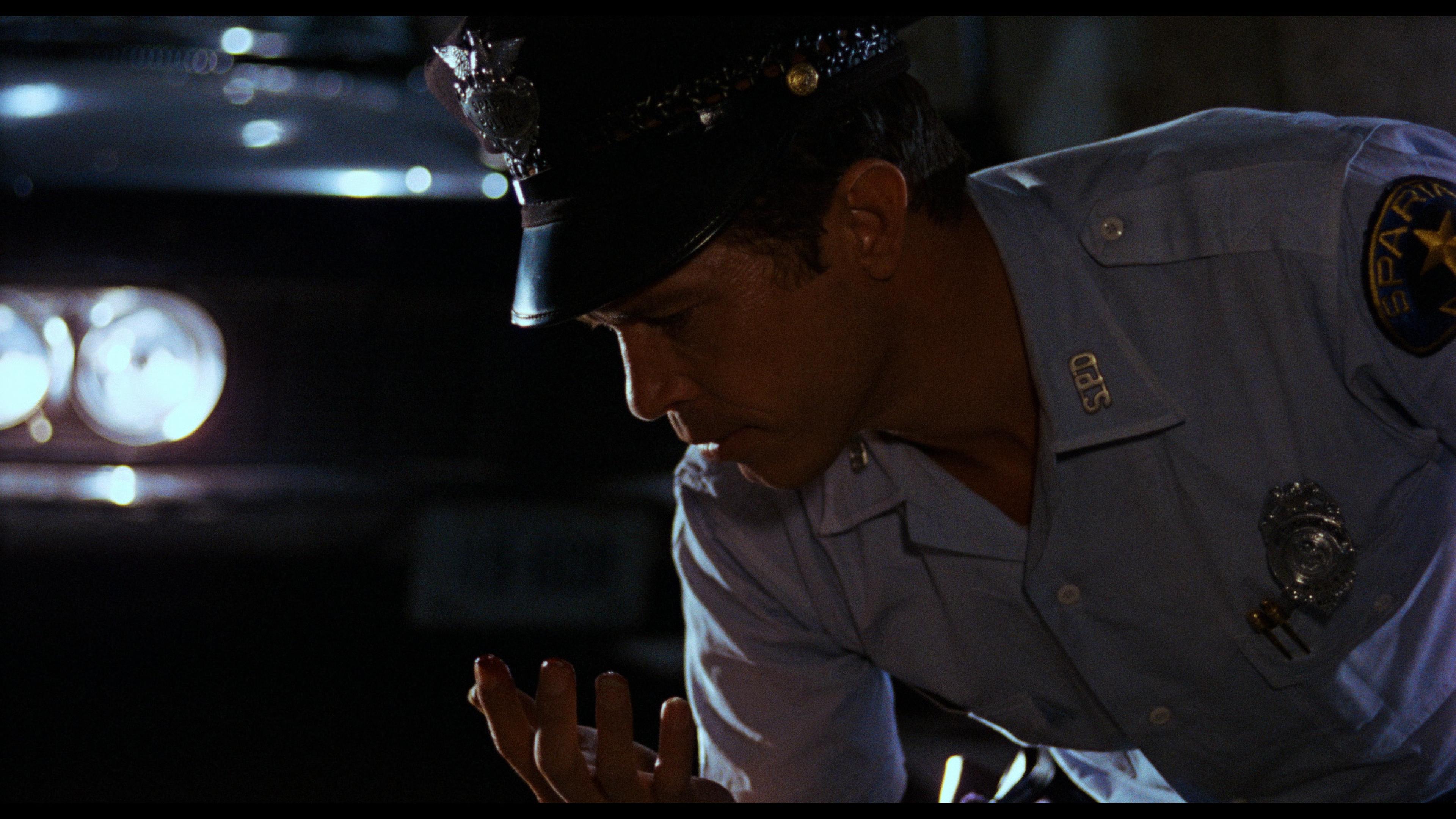
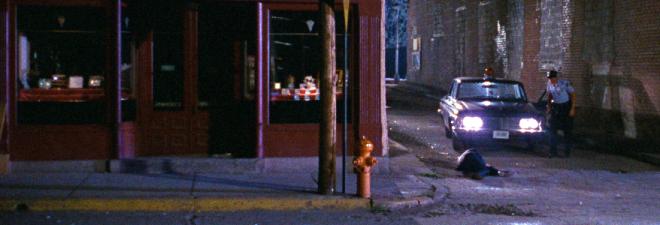
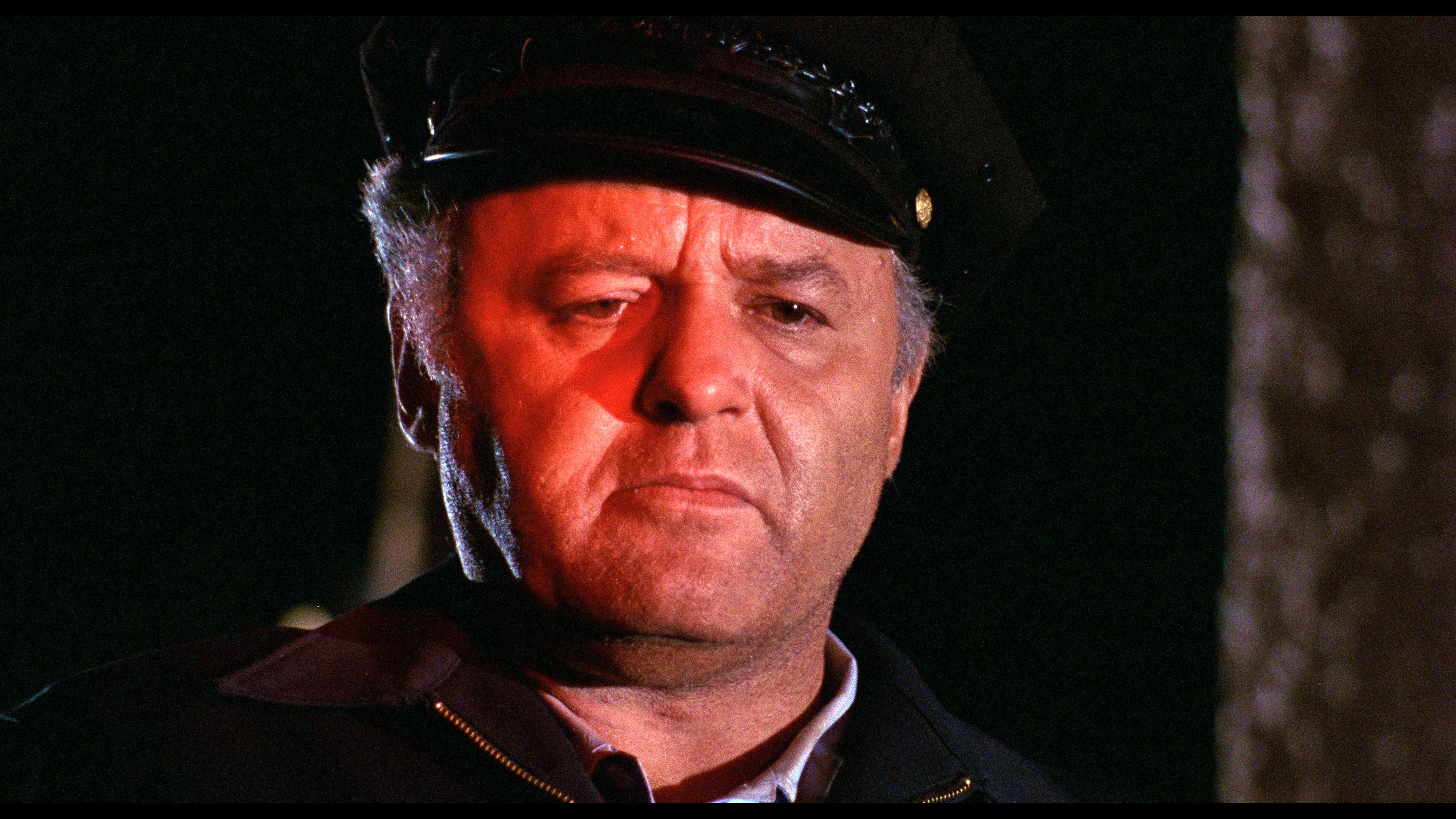
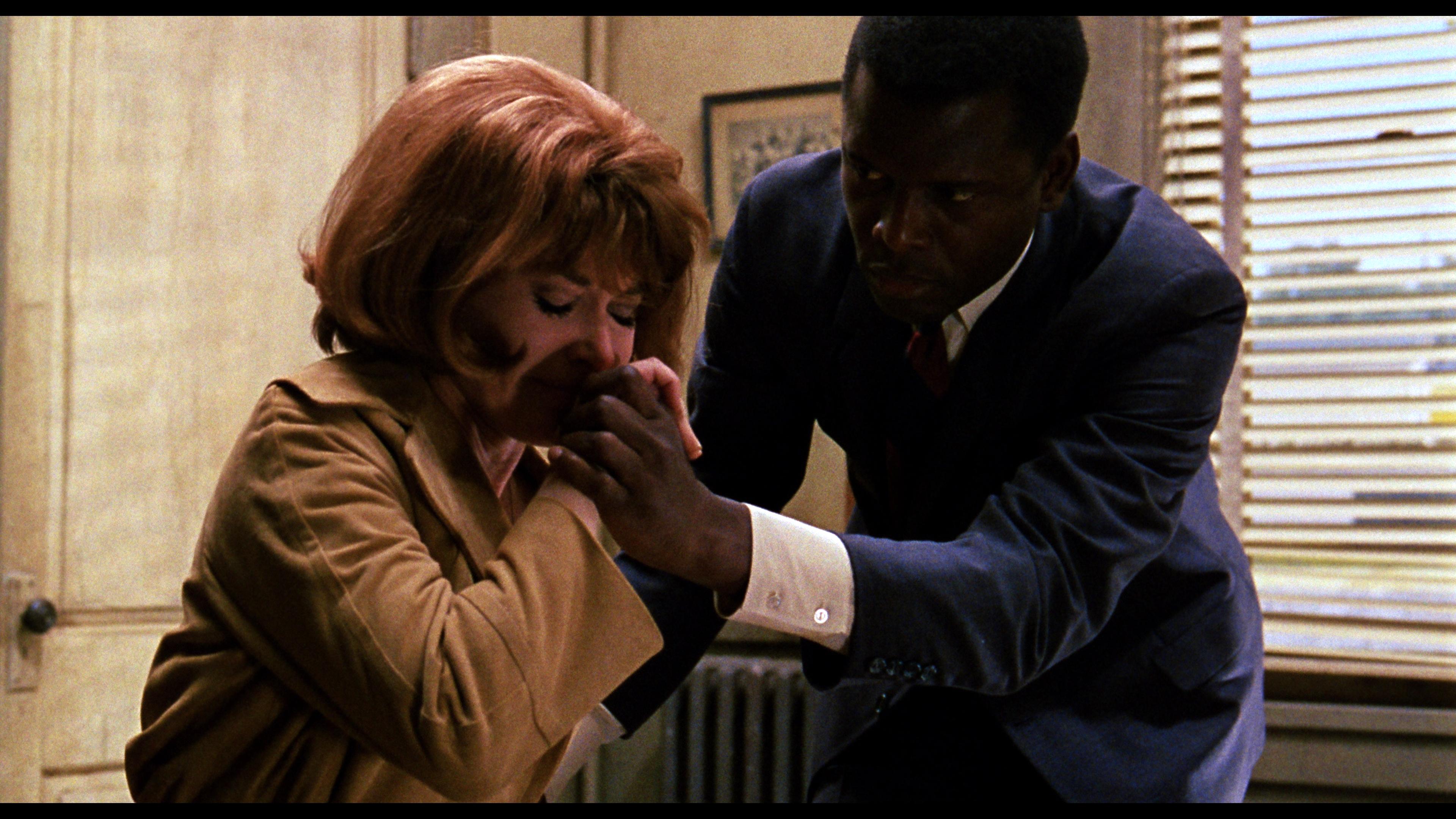
Returning to 4K Ultra HD Blu-ray, Criterion delivers what amounts to the same 2160p SDR transfer as what Kino Lorber Studio Classics delivered for their disc. The only difference is encoding, but even that doesn’t yield a massive difference. Bitrates are virtually identical, nearly bit-for-bit, but credit where credit is due, the encoding for this Criterion disc is a tad better. For some sequences, the film grain resonates a little tighter and more natural than the KLSC disc. But this is a small difference that’s barely even perceptible at all. Certainly not enough of a difference-maker to warrant another purchase if you already have the KLSC disc.
Now in Germany, there is a 4K disc out there with Dolby Vision HDR, but I have not seen that one for myself and don’t know for sure if it offers anything worthwhile. As for why this film is again presented in SDR, I don’t really know. But I have to say I don’t think it matters much. Colors, definition, and black levels are already fantastic perfectly bringing Haskel Wexler’s cinematography to 2160p. Even in SDR, this transfer is a noticeable improvement over Criterion’s earlier 1080p Blu-ray and should be celebrated. If it turns out an HDR grade can make the film look that much better, I’ll happily eat some crow and buy the film yet again.
Audio Review
On the audio side, Criterion uses the DTS-HD MA 5.1 that KLSC offered for their disc while delivering the same LPCM mono track they used for their initial Blu-ray. Truth be told you can’t go wrong with either track. Both are great. I lean towards the LPCM mix in this instance as I would the DTS-HD MA 2.0 track on the KLSC set, but I have to admit that the 5.1 is a quality job. I like that it doesn’t go overboard or try to be too flashy or expansive with the mix keeping to the film’s tight framing and the great score from the late Quincy Jones. Regardless of which way you side for sound, it’s nice that Criterion opted to include both listening options. Note: The included Blu-ray disc is identical to their previous Blu-ray and only offers the LPCM mono mix.
Special Features
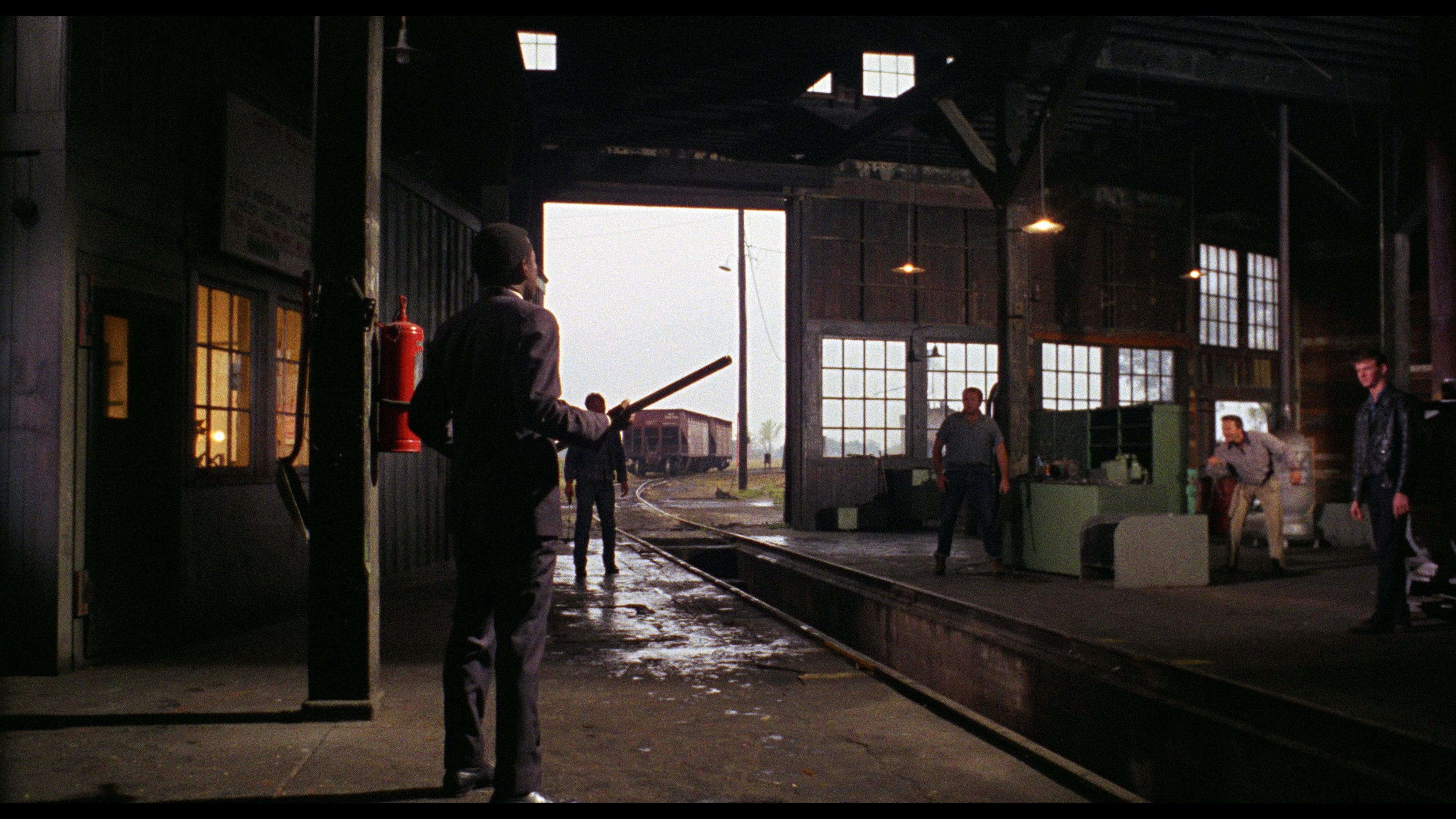
Returning from Criterion’s own Blu-ray release are the same run of extra features. Nothing new has been added which muddies the water a little bit when compared to the KLSC release. That disc offered up an excellent commentary track and a couple of other tidbits along with this film’s two sequels starring Poitier.
4K UHD Disc
- Audio Commentary featuring Norman Jewison, Haskell Wexler, Rod Steiger, and Lee Grant
Blu-ray Disc
- Audio Commentary featuring Norman Jewison, Haskell Wexler, Rod Steiger, and Lee Grant
- 2018 Norman Jewison Interview
- 2006 Sidney Poitier Interview
- 2018 Lee Grant Interview
- 2018 Aram Goudsouzian Interview
- Turning up the Heat: Movie-Making in the ‘60s.
- Quincy Jones: Breaking New Sound
- Trailer
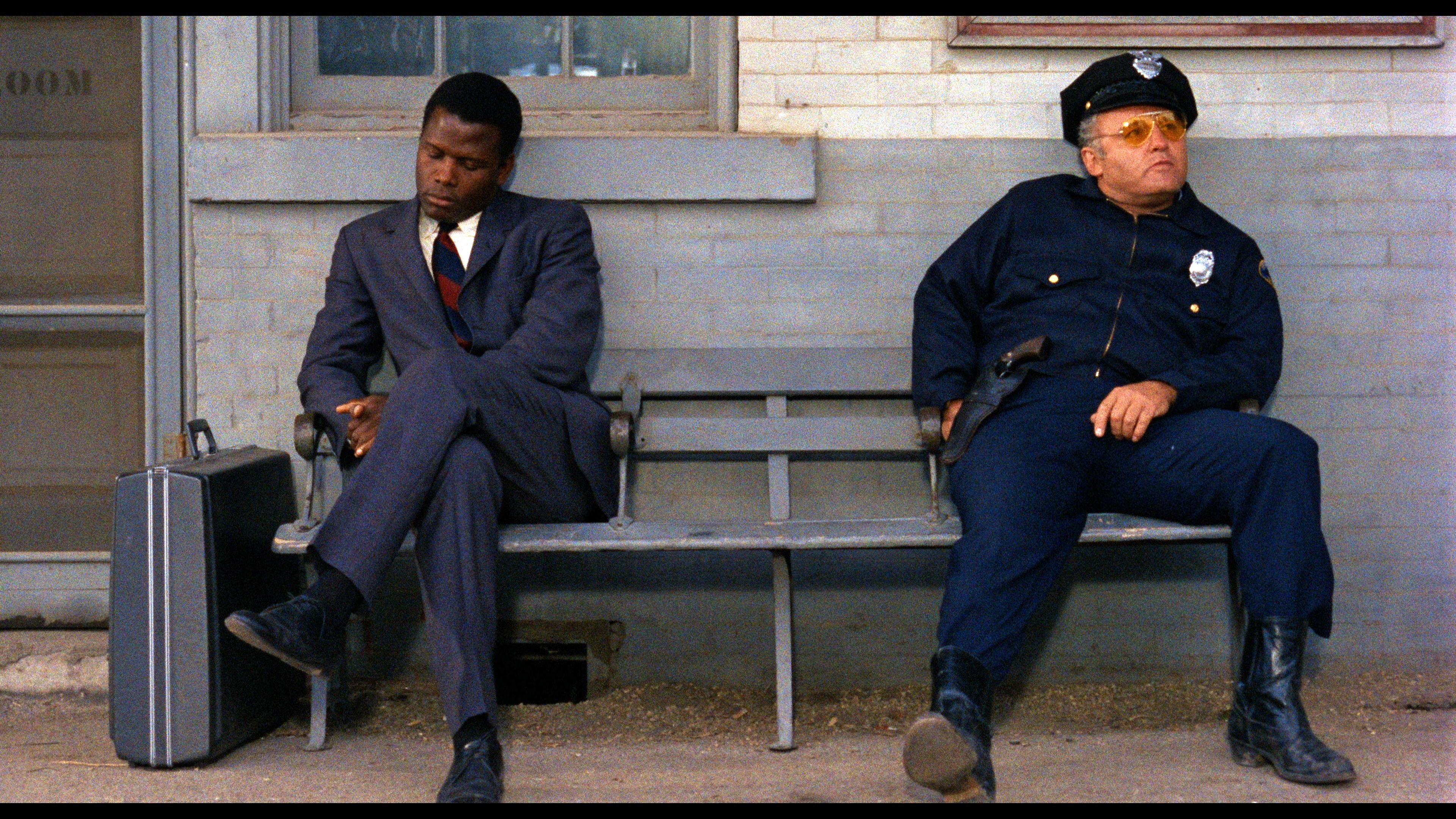
This is a damned messy hobby sometimes. Multiple releases of the same film on the same format from two different labels within just a couple of years don’t help matters. Criterion delivers an excellent 4K UHD release of In the Heat of the Night, no doubt about that. But so did Kino Lorber Studio Classics. Part and parcel, with only some nominal differences with the video encoding, there’s little of any difference between Criterion and KLSC’s 2160p SDR transfers. Both are excellent presentations matched with equally excellent audio options - Criterion just happened to keep to LPCM for their mono track. The difference and deal maker/breaker is going to come down to the bonus features. While Criterion has their excellent exclusive interview segments, that’s all this set has. Nothing new has been added since their first Blu-ray, and none of the exclusive extras from the KLSC disc have been licensed. So this is a conundrum of a disc. I have to call it Highly Recommended - it’s an amazing film with a fantastic A/V presentation and strong extras, but since there’s already a 4K disc out that’s just as good in key respects, I can’t say buying this one again if you have the other makes any sense. But since the KLSC disc is going OOP, newcomers have a little easier choice to make.
-
 Turbine Gasses Up For Texas Chainsaw Massacre 4K UHD Mediabook Legendary BundleBy:
 -
 Strange Bedfellows: Why Horror is a Natural Fit for 4K UHD & Blu-ray Physical MediaBy:
 -
 Turbine Is Back In Action for John Watts’ ‘Clown’ on 4KUHD Mediabook November 13th!By:
 -
 The Horror of 'Clown in a Cornfield' Comes Home With A 4K UHD SteelBook from RLJE Sept. 9th!By: