Hush: Collector's Edition - 4K Ultra HD Blu-ray
4K UHD Review By: Bryan Kluger
Mike Flanagan and his wife Kate Siegel have finally delivered their third feature film titled Hush on physical media, courtesy of Scream Factory. This terrifying film is about a masked killer stalking a deaf, mute woman who utilizes some wonderful twists and turns not only in its narrative but also in its visual and audio landscape. The added new Shush cut is phenomenal while the original 4K image with HDR10 looks amazing. The Dolby Atmos track also stuns. The new bonus features are all worthwhile, especially the new video commentary from the cast and crew. MUST OWN! 
Storyline: Our Reviewer's Take

In the pantheon of home-invasion thrillers, Hush may not yet be a household name, but it deserves to be. Directed by Mike Flanagan, a filmmaker already known for his atmospheric sensibilities and deft handling of tension, Hush arrives as an audacious, tautly crafted entry into the genre of stalking killers, and it is a revelation. With a simple premise that nods to classics like Wait Until Dark and Halloween, Flanagan’s film is a study in suspense, a master class in how the silence of isolation can be just as terrifying as the screams of terror.
The film’s premise is deceptively straightforward: a deaf and mute woman, Maddie (Kate Siegel), living seemingly alone in a remote cabin, is stalked by a masked killer (John Gallagher Jr.). What sets Hushapart, however, is its reliance on the absence of sound—not just as a thematic device, but as a vital element of its horror. The deafness of its protagonist becomes an essential component of the terror, a form of sensory deprivation that amplifies the tension in ways few horror films dare to explore. Much of the film’s runtime unfolds in near-total silence, punctuated only by the subtle sounds of Maddie’s movements and the quiet, methodical stalking of her assailant. It’s an approach that doesn’t just sustain suspense—it heightens it, as every creak of a floorboard or soft tap of a window becomes a harbinger of impending doom.
Maddie, a successful author who has retreated to the woods to finish her latest book, finds herself trapped in a fight for her life after the masked killer arrives at her doorstep. The simplicity of this setup allows Flanagan to focus on what really matters: the slow-burn tension between hunter and prey, and the extraordinary resourcefulness of a woman forced to use every ounce of intellect and strength to survive. In lesser hands, this could have become a repetitive chase, but Flanagan infuses each scene with ingenuity. Unlike the ubiquitous knife or gun, the killer in Hush uses a bow and arrow, a weapon that brings to mind the medieval, mythic Robin Hood. The choice underscores the surreal nature of the threat, casting the killer not as a mere maniac, but as a force of pure, sadistic determination.
Flanagan’s use of silence is equally innovative. While many thrillers might use sound as a tool to disorient or mislead, here, silence becomes a weapon of its own. Without the ability to hear approaching danger, Maddie is forced to rely on her instincts and the limited sounds of the environment - her breath, the vibrations of the floor, the slight movement of objects. These moments of stillness are excruciating, and yet, they never feel gimmicky. The horror is not just in what is happening on screen, but in the deep, almost suffocating quiet that surrounds it. Flanagan’s direction ensures that every scene is suffused with an undercurrent of dread, and the result is a film that doesn’t just make you jump it stays with you, gnawing at the edges of your consciousness long after it ends.
At the heart of Hush is Kate Siegel’s commanding performance. Siegel, who not only stars in the film but co-wrote it with her husband Flanagan, imbues Maddie with a vulnerability that never devolves into helplessness. Far from being a passive victim, Maddie quickly reveals herself to be a survivor, her intellect and grit making her a formidable adversary to the relentless killer. Siegel’s portrayal of a woman forced to fight in silence, her only weapon her wits, is a testament to her range as an actress. She carries the film with a quiet strength, and her performance anchors the film’s emotional core. The balance of vulnerability and empowerment she strikes is what ultimately makes Maddie such an unforgettable final girl.
But what truly sets Hush apart from the glut of home-invasion thrillers is its refusal to take the easy route. In an early sequence, Maddie writes a chilling message on a window: "Won't tell, didn't see face, boyfriend coming home." In any other film, this might prompt the killer to hesitate or reconsider. But Flanagan’s killer is not interested in mercy. Instead, he reveals his face in a moment that is both chilling and perversely matter-of-fact, his sadistic pleasure in the terror he creates manifest in every action. This isn’t a film where the villain hesitates out of some misguided moral code. In Flanagan’s world, the terror is relentless, and the stakes feel real because the killer is operating on a disturbingly simple premise: he’s here to kill, and he won’t stop until he does.
For all its nerve-wracking suspense, Hush is also a love letter to the art of tension. It’s a horror film that works both within and against genre conventions, taking familiar tropes and recontextualizing them with a fresh intensity. It may be simple, but it is in that simplicity that Flanagan finds his greatest strength. It is proof that, sometimes, less is more—and that the scariest thing in the world is not the thing you see, but the thing you cannot hear coming.
As a footnote, it’s worth mentioning that Flanagan and Siegel's collaboration didn’t end with Hush. The pair would go on to create the highly praised Midnight Mass, a series inspired by Maddie’s fictional novel within Hush. That Hush could provide the foundation for such a haunting, ambitious work is a testament not just to the film’s success, but to the potential for horror to evolve into something deeper, richer, and even more unsettling. In the end, Hush doesn’t just deliver the goods—it redefines the genre, proving that true horror isn’t just about what you see. It’s about what you don’t hear coming.
Vital Disc Stats: The Ultra HD Blu-ray
Hush creeps its way to 4K + Blu-ray via Scream Factory. There are four discs that are housed inside a hard, black plastic case with a cardboard sleeve. The two 4K discs house the original and Shush cuts respectively. One Blu-ray features the film while the other allows for two hours of extras. The package artwork features Kate and the masked killer on opposite sides of the artwork hiding from each other. Note: The artwork indicates this set has Dolby Vision HDR, but that is a misprint, the specs were changed last minute and evidently that wasn't able to be changed before the artwork went to press. Portions of this review have been updated.
Video Review
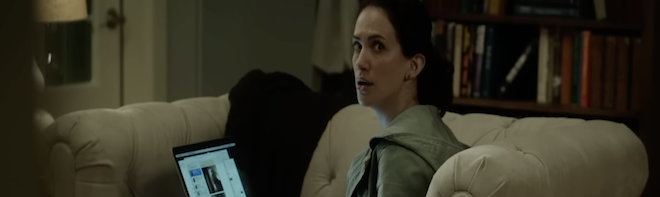
Hush—Mike Flanagan’s taut, suspenseful home-invasion thriller that masterfully weaves tension, isolation, and sensory deprivation—has finally received a long-awaited physical release from Scream Factory, presented in glorious 4K. This new edition, available in both a theatrical/Netflix cut and a unique "Shush" cut, comes under the meticulous supervision of Flanagan himself, offering fans an opportunity to experience the film in a new and haunting light. The result is a presentation that not only elevates the film’s aesthetic but also deepens its visceral impact.
The 2160p UHD 4K transfer, enhanced with HDR10, is nothing short of spectacular. The imagery, at once sharp and immersive, boasts an extraordinary level of detail that captures every nuance of the film’s carefully constructed visual world. Hush is, at its heart, a study in contrasts of light and shadow, sound and silence, safety and terror, and the 4K treatment brings these elements to the forefront with stunning clarity.
From the outset, the film’s color palette is striking: muted earth tones dominate the few outdoor sequences, where the film’s remote woodland setting unfolds in an almost painterly fashion. The skies are gray, the trees dark and gnarled, and the landscape rich with earthy hues that evoke a sense of foreboding. The house, set against this desolate backdrop, has an unassuming presence. Its exterior blends seamlessly with the natural world, while its interior, illuminated in warm, amber hues, offers a brief, comforting respite. The early moments of Hush are bathed in soothing, almost nostalgic colors, with oranges, browns, and reds gently lighting the home. However, as the film takes a darker turn, the comfort of those colors is stripped away, and the atmosphere grows increasingly claustrophobic. When the killer, masked and silent, cuts the power to the house, the visuals become bathed in near-total darkness, with only the erratic glow of flashlights and dim lighting offering any sense of direction. It’s in this blackout that HDR10's exceptional black levels truly shine and are deep, inky setting the stage for flashes of color that momentarily reveal the terror lurking in the shadows.
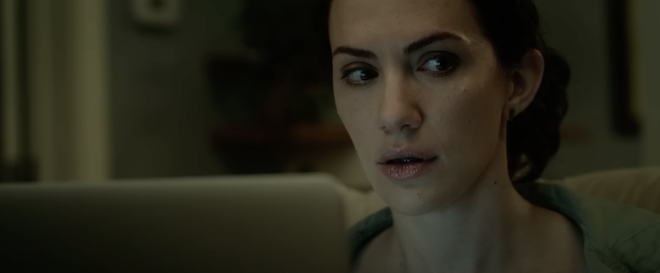
The new 4K presentation allows the film's meticulous details to stand out with astounding clarity. Close-ups of Maddie’s face reveal every bead of sweat, every pore and muscle twitch as she navigates the fight for her life. The practical gore effects are rendered in all their grisly glory, with each streak of blood and tear in the flesh heightened by the razor-sharp focus of the image. Textures on the actors’ clothing, on the weathered surfaces of the house, and even on the killer’s unsettling mask pop with precision. Nothing feels soft or lacking in detail, even in the background where wooden furniture and props create an atmosphere of isolation and dread.
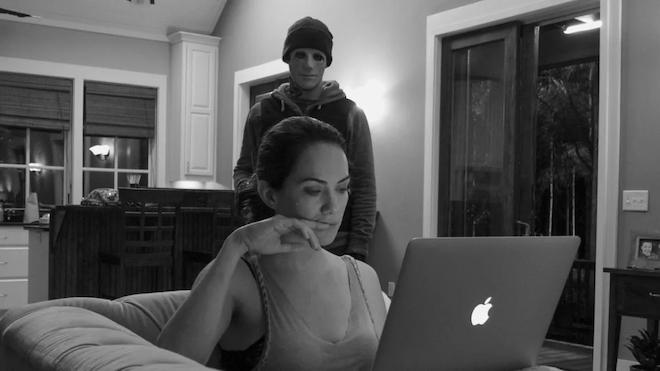
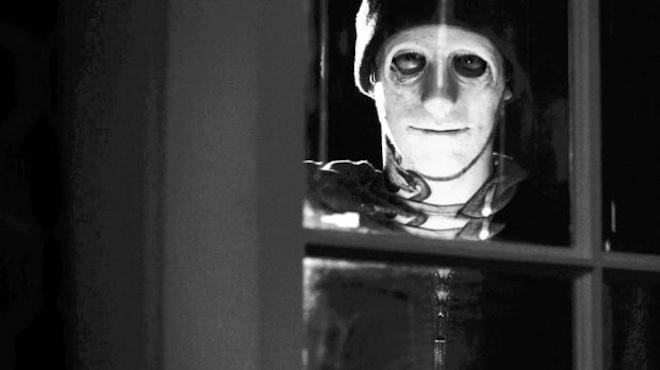
But it’s in the "Shush" cut, the black-and-white version of the film, where the visual experience takes on an even more unnerving character. Stripped of color and sound for much of its runtime, this version mirrors the sensory deprivation experienced by the protagonist, Maddie, a deaf woman trapped in her home by a relentless killer. The absence of sound heightens every visual detail, every flicker of light and shadow. The film’s black-and-white aesthetic transforms the starkness of the imagery into something even more menacing. White levels glow eerily, creating haunting contrasts against the pitch-black voids, turning the killer’s stalking into an almost spectral presence. The Shush cut evokes a nostalgic sense of '80s horror, its grainy texture lending it the quality of a forgotten, atmospheric classic, while still delivering the same stunning detail as the color version.
Both cuts of Hush are a visual feast, but the Shush cut offers a new way to experience this masterfully crafted thriller. The removal of color and sound only enhances the primal tension of the film, pushing its emotional and psychological stakes to new heights. It’s a stark, immersive ride that forces the viewer to confront the terror of Maddie’s world and in doing so, it transforms Hush into something even more unsettling than before. For those who thought they’d seen everything Hushhad to offer, this new 4K edition is a revelatory experience and a reminder of Flanagan’s genius as a storyteller.
In short: this is a 4K release worth every penny, not only for its pristine video presentation but for the opportunity to revisit a modern horror masterpiece in a fresh, visceral way. Whether you’re watching it in full color or experiencing the chilling silence of the Shush cut, this release is a reminder of how powerful horror can be when it engages the senses taking us out of our comfort zone, into the dark, where only fear remains.
Audio Review
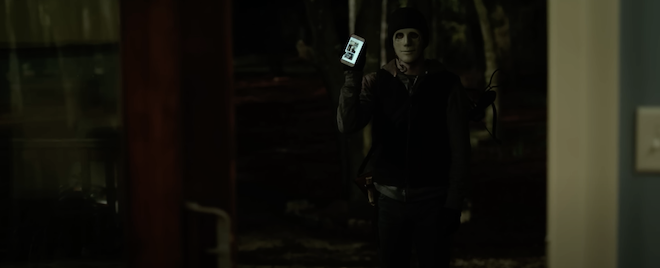
In the world of home theater, where technical details often blur into the background, the 4K Ultra HD releases of Hushstand as a masterclass in immersive audio design. Both discs come with a Dolby Atmos track, a DTS-HD 5.1 mix, and a DTS-HD 2.0 option, but it’s the Dolby Atmos that demands your attention. This track isn't just an enhancement; it’s an extension of the film itself. On the original version of Hush, the silence that punctuates the tension is palpable, but where the visuals might lull, the sound swells. The usual subtlety of sound design is replaced by a heightened intensity that makes every creak, every crack, every footfall feel seismic.
With a deftness that complements the film’s sparse score, the Dolby Atmos track brings the environment to life. Windows tapping, glass shattering, weapons clashing; each sound effect cuts through the silence, sharp and urgent. But it’s not just the dramatic moments that shine; the atmospheric sounds of footsteps on leaves, labored breathing, the murmur of the wind through the trees transform the house in the woods into a living, breathing entity. Nature is no mere backdrop; it’s a vital character in the film’s terrifying ecosystem.
The subtle use of height channels is particularly striking. Whether it’s the rustling of leaves or the whisper of wind, the outside world feels closer, more immediate. The score, though sparingly used, amplifies the suspense in crucial moments, while the dialogue remains crisp, clear, and easy to follow - essential for a film where silence is as integral as sound.
Then there’s the Shush Cut, which strips away the score entirely and brings the sound effects front and center. It’s a revelation in every sound, from the faintest rustle to the violent clang of a weapon, is elevated to a visceral level of intensity. Each movement of Maddie or her unseen pursuer is punctuated with a visceral punch that amplifies the tension in ways the original mix can’t quite match. It’s a daring, yet exquisite alternative, a brilliant addition that complements an already near-perfect sonic experience.
Special Features
There are about 115 minutes worth of interviews with the cast and crew of the film, plus three commentary tracks from the cast and crew, one of them being a video commentary track. The interviews are exquisite, fun, and provide a ton of information about the movie, and more. These are all worth watching.
- Audio Commentary #1 - The original version of the film comes with a NEW audio commentary from the actors and director, Kate Siegel, Mike Flanagan, John Gallagher, Samantha Sloyan, and Micahel Trucco. They all came back together to watch the movie again for this release and talked about making the film, some anecdotes from the set, the performances, and fun bits from behind the scenes.
- Audio Commentary #2 - This is an amazing Picture-In-Picture video commentary of the actors and director. It's the same one as above, however, everyone can now see them on screen talking about the film.
- Audio commentary #3 - This is the NEW Shush Cut commentary track with Kate and Mike talking about the differences between the film, the visual elements, and more great stories from the set.
- Shush Cut Intro (HD, 4 Mins.) - This is a great intro from both Kate and Mike who talk about creating this version of the film and how it aligned with their original thoughts of the movie.
- The Dance Macabre (HD, 29 Mins.) - A new interview with Mike Flanagan who discusses the tone, themes, performances, and origins of the film. Some of his home movies are shown here too.
- To Stand Alone (HD, 20 Mins.) - Kate Siegel talks about how she and Mike came up with the movie on a date and playing the final girl in horror. She also discusses stuntwork, horror, and more.
- The Constant Reader (HD, 6 Mins.) - Actress Samanta Sloyan talks about making the movie, her brutal death scene, and more.
- The Shape of Silence (HD, 19 Mins.) - John Gallagher discusses becoming the monster of the film, using weapons, getting into character, and more.
- Silent Witness (HD, 10 Mins.) - Actor Michael Trucco talks about acting in the film, his death scene, and more.
- One Good Scare (HD, 8 Mins.) - Producer Trevor Macy discusses working with Mike, getting the movie made, stories from the set, the sound design, and more.
- Violent Strains (HD, 11 Mins.) - Composers Jodh Grush and Taylor Stewart talk about scoring the movie, their challenges with having almost no dialogue in the film, and how the changes in the music and score transformed throughout the story.
- One Terrible Night (HD, 8 Mins.) - The Director of Photography James Kniest talks about the one-location shoot, lighting a movie in darkness, and stunts.
Final Thoughts
In the landscape of contemporary horror, Hush, directed by Mike Flanagan and co-written by Flanagan and his wife Kate Siegel, stands out as a taut, impeccably crafted thriller that reminds us of the genre’s power when stripped down to its essentials. Set almost entirely within the confines of a secluded home, the film operates with a minimalism that is both refreshing and unnerving. Flanagan’s decision to center the narrative on a deaf protagonist (played by Siegel herself) is a masterstroke, allowing the tension to unfold through an acute awareness of silence, vulnerability, and the creeping sensation of being watched - elements that heighten the terror without relying on traditional jump scares or overt gore. The 4K image in both versions looks excellent while the Dolby Atmos track sounds impressive. There are a ton of worthwhile bonus features too. In an era where horror films can sometimes get lost in spectacle, Hush is a stark reminder of the genre’s capacity for elegance and terror. It is, without question, a MUST OWN for any fan of horror and suspense.
-
 Strange Bedfellows: Why Horror is a Natural Fit for 4K UHD & Blu-ray Physical MediaBy:
 -
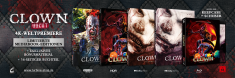 Turbine Is Back In Action for John Watts’ ‘Clown’ on 4KUHD Mediabook November 13th!By:
 -
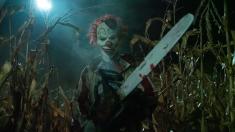 The Horror of 'Clown in a Cornfield' Comes Home With A 4K UHD SteelBook from RLJE Sept. 9th!By:
 -
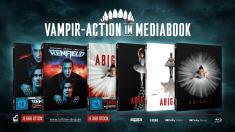 Turbine Sinks Their Fangs into Our Necks With NEW Renfield and Abigail 4K UHD Mediabooks!By: